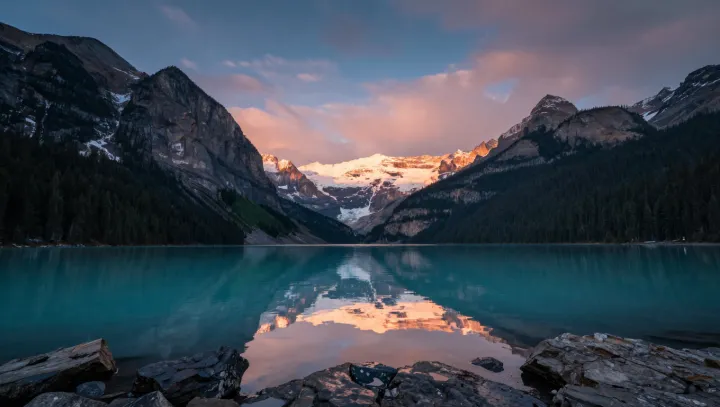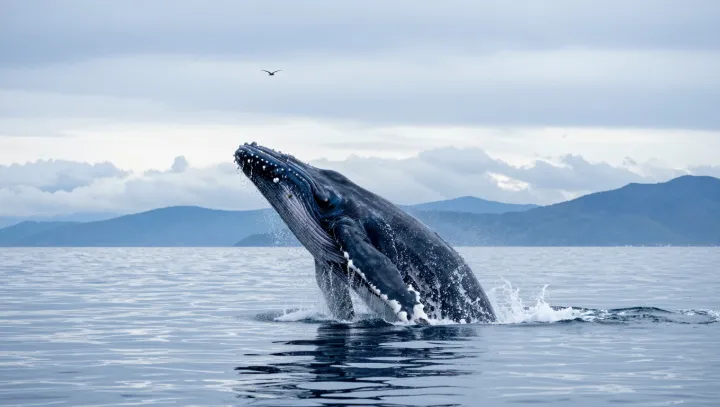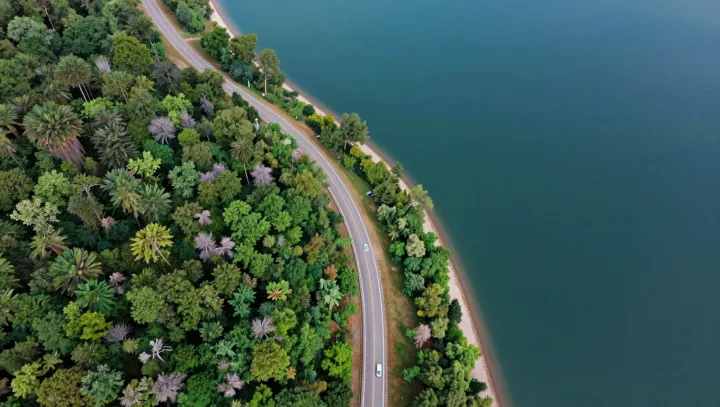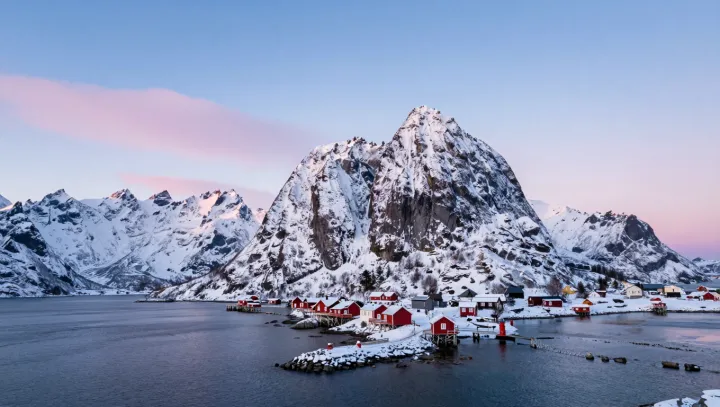
Dark cliffs, cold air and bright surf frame the Lofoten Islands, yet the water that wraps this Arctic archipelago feels unexpectedly mild. The explanation lies not in local weather but in the global architecture of ocean circulation shaped by Earth’s rotation.
Warm, salty water leaves low latitudes in a surface flow often grouped under the label Gulf Stream. Steering by the Coriolis effect, it is deflected poleward and eastward, sliding along continental margins before turning toward the Nordic seas. As this current approaches Lofoten, it releases sensible and latent heat into the atmosphere, raising regional sea-surface temperature far above what latitude alone would predict and suppressing extensive sea ice.
Beneath the surface, thermohaline circulation closes the loop. As the warm water cools and increases in density, parts of it sink and join deep currents that creep back toward lower latitudes, redistributing heat and salt in a slow global conveyor. The exact balance between wind-driven gyres and density-driven overturning determines how much tropical energy reaches Lofoten’s coast. Oceanographers treat this as a problem in heat flux and angular momentum, yet for the islands it simply means jagged Arctic scenery set above water that stays remarkably gentle to the touch.