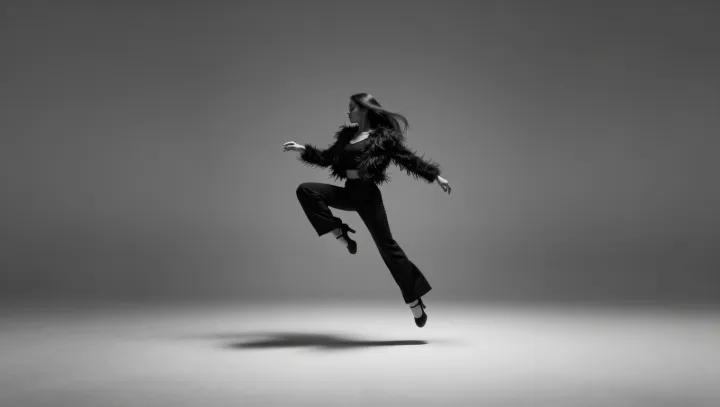
A small tweak in a ballet shoe quietly redrafted the rulebook for how bodies meet fabric. When makers reinforced the toe box and shank of early pointe shoes, they were not chasing style; they were rewriting load paths. By shifting body weight onto a hardened platform, the shoe turned the foot into a column and the floor into a spring partner.
That hack forced designers to confront biomechanics rather than ornament. Stiffened layers, controlled curvature and selective padding created a primitive study in elastic modulus and stress distribution. The shoe had to store mechanical energy on landing and return it on takeoff, like a tuned mass‑spring system described in classical mechanics, while still protecting bones and soft tissue from peak pressure.
Modern performance fashion quietly inherits this physics. Carbon‑plate running shoes, compression leggings and sculpting bodysuits all iterate on the same principles: redirect ground reaction forces, manage shear stress, increase energy return and stabilize joints. Motion‑capture labs and finite element analysis simply formalize what that early pointe‑shoe experiment discovered on stage: clothing is not decoration wrapped around a body, it is hardware in a dynamic load‑bearing circuit.