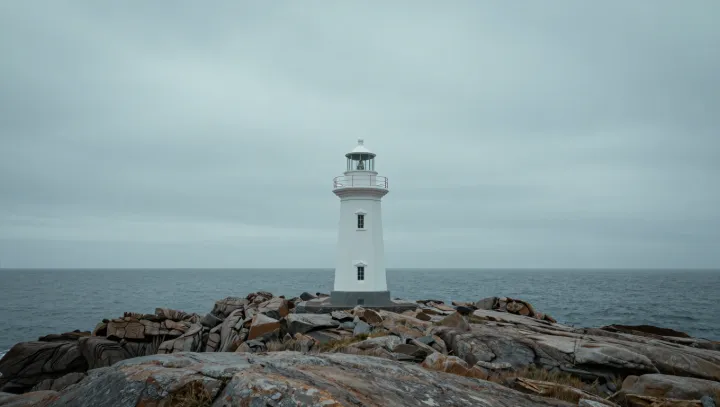
A wavering flame on a headland once counted as navigation technology. Early lighthouses were simply elevated fires, their range limited by combustion physics and the curvature of the sea. As trade routes densified and hulls grew larger, that crude glow became a liability, exposing the entropy of a system that relied on guesswork in fog, storm and darkness.
Engineering turned that ember into an instrument. Stone towers fixed the focal height. Reflectors and later the Fresnel lens concentrated luminous intensity while reducing energy loss, a practical lesson in geometric optics and refractive index. Rotating mechanisms, governed by clockwork and then electric motors, converted steady light into timed flashes. Each sequence functioned as a codeword in a global signaling system, reducing navigational uncertainty much like a low-tech version of a GPS constellation.
Those patterns did more than prevent shipwrecks; they reacted to them. A collision on an unmarked reef could prompt a new tower, a change in focal plane, a revised flash character in official sailing directions. Hydrographic offices logged wreck positions, insurers calculated marginal effects on risk, and lighthouse authorities rewrote light lists. The shoreline became a distributed archive: every altered beam, every new period of darkness and light, a terse footnote to a disaster that forced the sea to be mapped again.