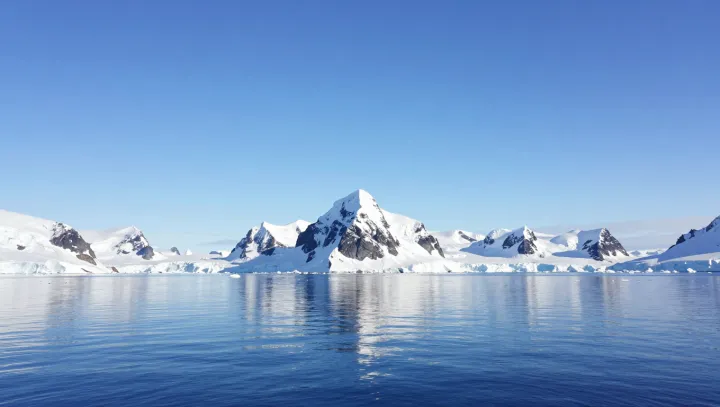
A cloud sea looks most unreal when it is not wide at all. Telephoto framing stacks distant cloud layers so tightly that the sky reads as a single surface, more like water than vapor.
The effect starts with perspective projection, a basic rule in geometric optics. When the angle of view narrows, differences in apparent size between near and far objects shrink. This “compression” is not a digital trick; it is simply how light rays map onto the sensor. Multiple cloud decks at different altitudes, which an ultra‑wide lens would spread across the frame, collapse into one dense band when sampled through a long focal length.
Parallax also drops. With a narrow field, the viewer sees less lateral shift between layers, so separate formations stop reading as discrete volumes and instead merge into a continuous plane. Atmospheric perspective then smooths the result: Rayleigh scattering and aerosol diffusion wash distant details in similar luminance and color. A telephoto lens, by isolating only that distant zone and excluding the horizon or foreground terrain, removes depth cues that would normally signal height, turning three‑dimensional weather into a flat, surreal ocean.