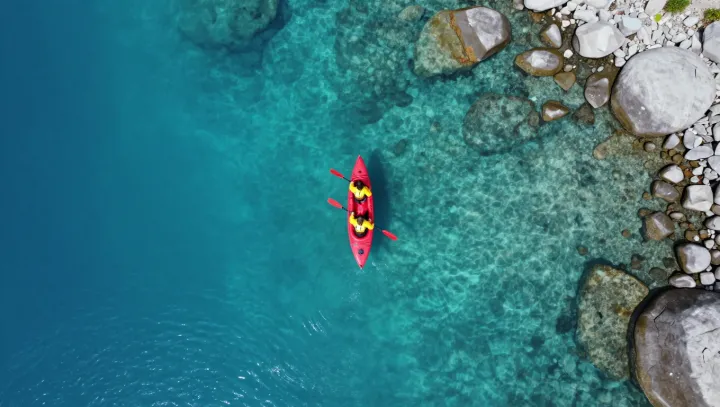
Speed in a tandem kayak is wildly overrated as a strength contest. Water resists chaos more than it resists force, and hydrodynamics punishes every mistimed blade entry with drag that no gym-built torso can buy back. When both paddlers match stroke rate, angle, and catch point, the hull stops twitching, the bow stops yawing, and the boat rides its own bow wave instead of constantly climbing over it.
The real shift happens in the brain, not the shoulders. As partners lock into a shared cadence, their motor cortex activity starts to mirror, an informal kind of interpersonal entrainment that lets each body predict the other’s micro-movements a fraction of a second ahead. Decisions flatten into reflex: who sets the pace, who edges on a crosswind, who softens power in chop so the kayak maintains trim instead of hobby-horsing in place.
What looks from the shore like two people simply paddling is closer to a small, self-tuned control system. Tiny cues in blade splash, hull vibration, and torso rotation feed a constant feedback loop, trimming effort where turbulence spikes and adding power where laminar flow can actually convert it into forward motion. At that point, the loudest change is not in the wake, but in the way two nervous paddlers fall silent and move as if one calm engine is doing all the work.