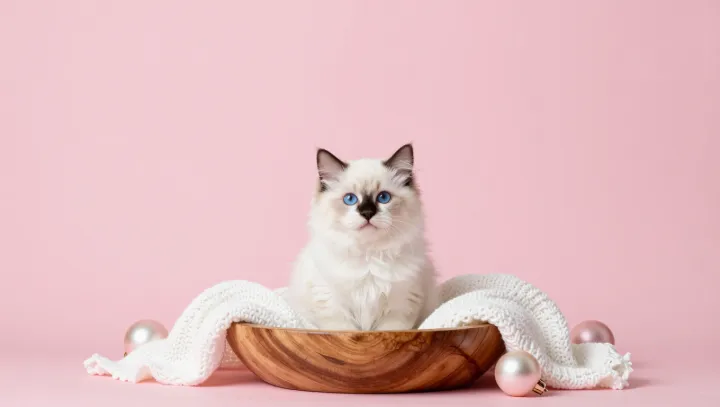
A plush, blue-eyed body goes limp in human arms, and the pose looks like a fairy-tale illustration. Behind that signature Ragdoll “flop,” though, sits a deliberate breeding strategy that has tuned down key elements of the feline stress response and turned a once wary predator into a companion optimized for contact.
Breeders have selected for cats that show reduced activation of the sympathetic nervous system and a blunted startle reflex, reshaping the usual feedback loop between sensory input and motor output. In neurobiology terms, circuits governing fear conditioning and flight behavior appear less easily triggered, so many Ragdolls tolerate restraint, handling and loud environments that would send other cats under the sofa. This is domestication pushed further along the axis of neoteny and social bonding, trading vigilance for approach behavior and touch-seeking.
That same calm makes Ragdolls unusually vulnerable in unsupervised settings. A cat that does not readily mount an avoidance response is at higher risk around open windows, rough play, or other animals, and its stress physiology may rely more heavily on human-controlled environments. Ethologists point to concepts like behavioral ecology and homeostasis to frame the trade-off: selection for extreme docility increases emotional availability for humans but narrows the animal’s own toolkit for self-protection when left alone for long stretches.