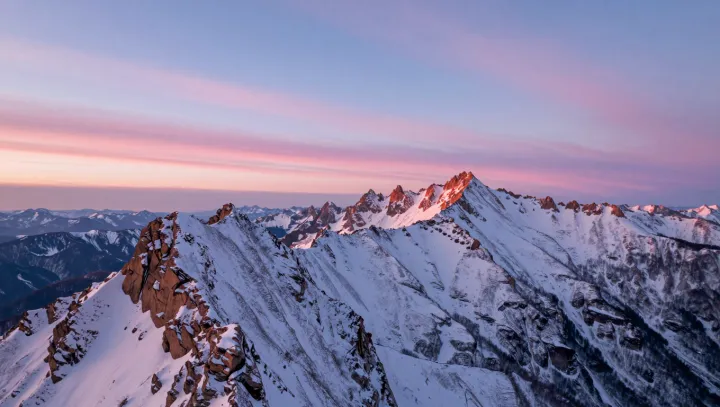
Namcha Barwa is not a mountain; it is a cul‑de‑sac. At the eastern hinge of the Himalaya, where the Yarlung Tsangpo makes its famous U‑turn into the Great Bend gorge, the peak rises like a plug jammed into a geological drain, sealing off a maze of ridges that already feel like the end of the road.
Climbers quietly agree on a heresy: this lower summit is a harsher opponent than Everest. The reasons are not romantic; they are mechanical. The massif sits inside one of the deepest river gorges on Earth, so access corridors are long, narrow, and exposed, a textbook case of terrible logistics. When jet stream winds slam into the abrupt corner in the range, orographic lift builds towering storm cells that dump snow with brutal intensity, loading slabs that fail in full‑slope avalanches rather than neat, survivable slides.
Rescue here is almost theoretical. Helicopters face thin air, violent rotor‑wash turbulence and nowhere to hover or land; even short‑haul operations become high‑risk experiments. Retreat on foot is barely more realistic, because the flanks are composed of fractured metamorphic rock and unstable seracs, a moving structure where every thaw resets the route and erases fixed anchors. That is why veteran mountaineers call Namcha Barwa the Great Bend’s Gate: once you step through, the door behind you does not really stay open.