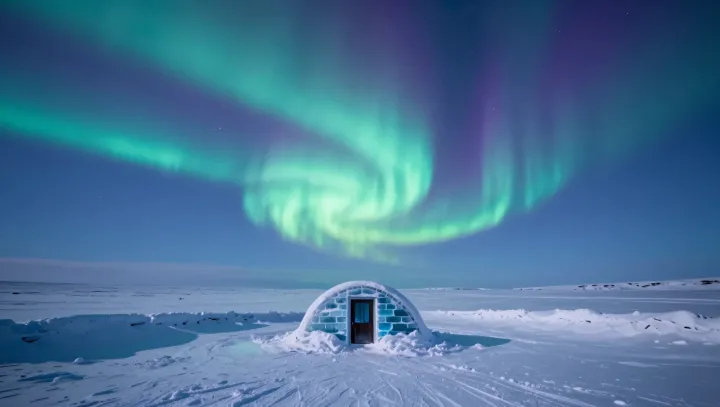
Cold is not the main enemy inside a polar shelter; air movement is. Thin fabric or composite panels face temperatures that could freeze water in minutes, yet inside, still air becomes the first line of defense. Trapped in foam, inflatable baffles and double walls, air forms low-conductivity layers that slow heat transfer by conduction and suppress convective currents that would strip warmth away.
The real heater is not a gadget but the people themselves. Human metabolic heat, on the order of dozens of watts at rest and far more after hauling sleds, turns a small tent into a low-power furnace. Designers size floor area and ceiling height so that a few occupants can raise interior air temperature significantly, while vapor barriers and thermal breaks in the frame prevent that hard-won warmth from leaking into the ice or metal contact points beneath.
Wind, though, would erase all this careful work. Shelters are pitched behind snow walls or sculpted drifts that act as external baffles, cutting wind shear that would boost convective heat loss through the skin. Low, rounded profiles shed gusts, vestibules create pressure buffers at the door, and tightly sealed seams reduce infiltration so each exhaled breath, each warm sleeping bag, adds to a stable microclimate rather than to the frozen air outside.