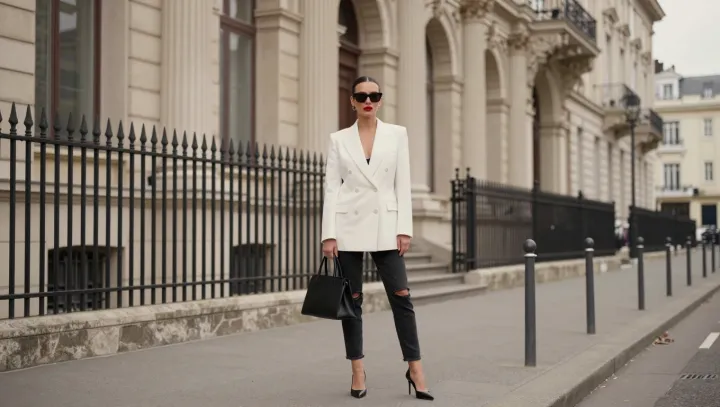
A white blazer does something most power pieces fail at: it looks in charge without looking inhuman. Sharp shoulders, clean lapels, and a clear waist seam echo classic tailoring, the visual grammar offices have long read as competence and control.
Yet the color undercuts the severity. White reflects more light than navy or black, softening facial shadows and literally brightening the wearer in a group, an optical effect linked in color psychology to openness and safety rather than threat. That same brightness makes micro expressions easier to read against the pale frame, which research on nonverbal communication ties to higher perceived warmth and honesty.
There is also a quiet status play. White shows stains and wrinkles fast, so it hints at access to clean spaces, shorter commutes, maybe even dry cleaning on demand. But unlike a dark power suit, it carries associations with resort dressing and medical coats, a blend of leisure and professional hygiene that feels less combative than boardroom armor. In a single garment, hierarchy is announced and then immediately softened.