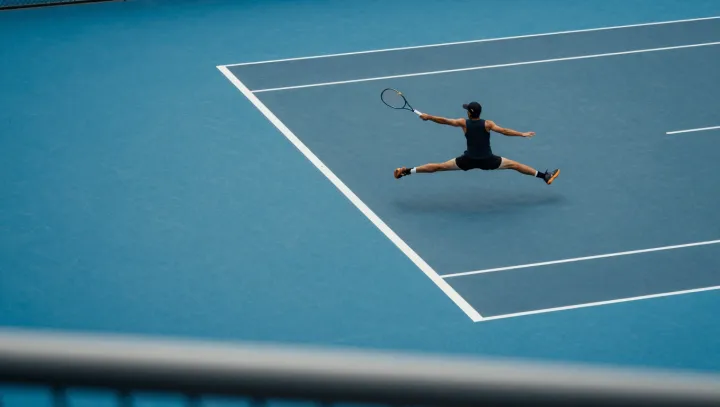
Ball after identical ball is not a sign of lack of imagination; it is the signature of serious ambition. On elite courts, the forehand crosscourt and the neutral backhand get more real estate than any trick shot, because those patterns are what the brain can automate under stress. Motor cortex, basal ganglia and cerebellum wire together only when a signal is repeated in almost the same context, again and again, until reaction time drops and variability shrinks.
The popular idea that variety speeds learning is badly overstated. Under match pressure, the nervous system falls back on procedural memory, not on clever conscious plans, and that memory is built through high-repetition, low-novelty drills that engrain a stable motor program. Fancy improvisation taxes working memory and prefrontal control, both of which degrade when heart rate spikes and muscles flood with lactate, so the shot that survives is the one rehearsed to boredom.
The harsh truth for ambitious amateurs is this: the only shortcut your brain accepts looks, from the outside, like slow work. Constant repetition drives synaptic plasticity and myelination along the same neural pathways, trimming away inefficient options and creating what coaches call a groove but neuroscientists describe as a reinforced circuit. That is why elite players tolerate the monotony of endless basics while others chase novelty; only one of those strategies still works at break point.