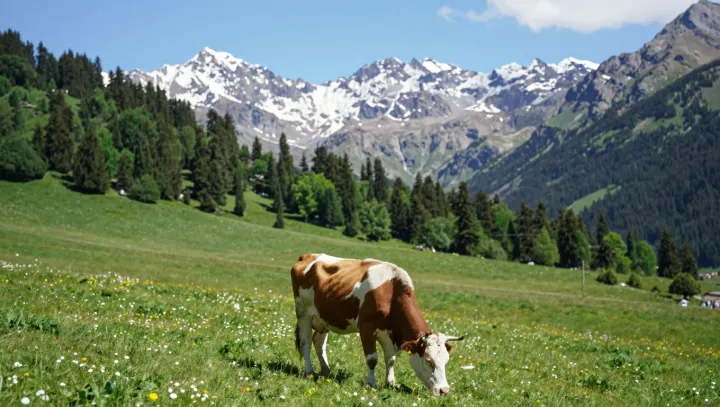
A squat, dark calf on a steep Alpine slope looks almost uneconomical. Yet inside that compact frame sits one of agriculture’s most efficient two-in-one designs, refined as terrain, science and markets quietly rewired an old mountain type into a dual-purpose engine for both milk and meat.
The blunt truth is that harsh mountains reward thrift, not glamour. Selection in the Swiss Alps favored cattle with dense bone, powerful forequarters and robust cardiopulmonary capacity, traits that first protected survival but later became raw material for high dressing percentage once meat markets expanded. At the same time, herdsmen kept only cows that cycled reliably, calved without assistance and filled small copper cans with milk rich in protein and casein, ideal for long-keeping cheese. Natural culling under altitude stress worked like a slow genetic sieve, removing fragile lines and consolidating animals that could walk, graze marginal forage and still sustain lactation.
What looks like a rustic tradition is in fact quiet applied genetics. With the spread of herdbooks and artificial insemination, breeders began to track estimated breeding values for traits such as milk yield, fat percentage and carcass conformation, deliberately pairing bulls that balanced mammary capacity with muscling. Rations shifted from wild meadow hay to carefully formulated total mixed rations, raising metabolizable energy intake without exploding body fat, so cows could support both sustained lactation curves and substantial muscle hypertrophy. The result is a massive but metabolically efficient body, where the same rumen ferments rough forage into precursors for both casein-rich milk and saleable beef, turning a once modest mountain cow into a global benchmark for dual-purpose productivity.