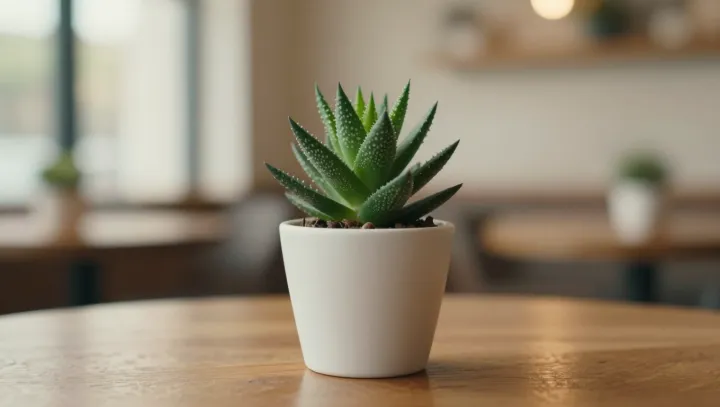
Those fat leaves are not decoration; they are hardware. Each succulent leaf is packed with parenchyma cells that function as a living cistern, their vacuoles swollen with bound water rather than free, easily lost liquid.
More radical than the storage is the way these plants spend almost nothing. They run CAM photosynthesis, a biochemical hack that shifts gas exchange into the dark. Stomata stay shut during scorching daylight, slashing transpiration, while malic acid pools inside cells as a temporary carbon vault. Around that system sits a thick cuticle and dense epicuticular wax, raising resistance to diffusion so high that passive loss becomes a slow leak, not a gush.
There is also quiet control in the plumbing. Low hydraulic conductance through xylem and leaf tissues throttles internal water flow, preventing catastrophic cavitation when soil is bone dry. Cells tolerate osmotic swings via elastic walls and high concentrations of osmolytes, so turgor falls gradually instead of triggering instant wilt. What looks like effortless lushness on a windowsill is, in anatomical and physiological terms, a tightly budgeted survival strategy built for long drought.