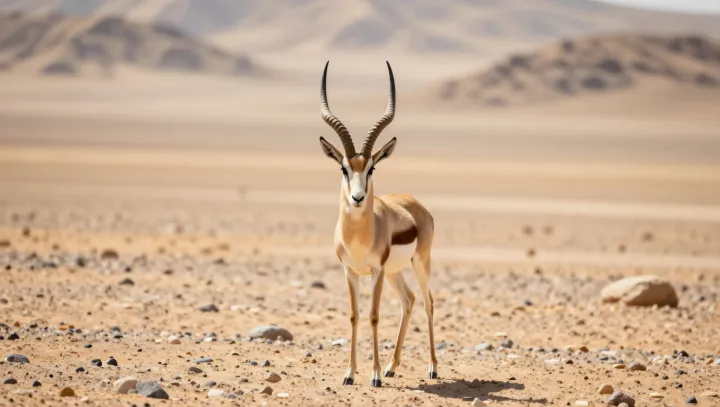
White flanks do not make this animal safe; they make it strategic. The Arabian oryx treats heat like a budget, not a threat, using a flexible hypothalamic set‑point so core temperature is allowed to rise by several degrees during the day, then fall again at night. By widening that range, it cuts the need for evaporative cooling, which would waste precious water in air hotter than many ovens.
The real shock is how little free water this system needs. Instead of drinking, the oryx leans on metabolic water, the H₂O released when plant carbohydrates and lipids are oxidized in cellular respiration, and it selects desert shrubs and grasses with relatively high pre‑dawn water content. Cool morning air lets it harvest dew on foliage, then feed when leaf water potential is highest, squeezing every gram of fluid out of what looks like dry brush.
Even its body shape reads like an engineering diagram. Long legs lift the core away from scorching ground, nasal turbinates reclaim water from each exhaled breath through countercurrent heat exchange, and a pale coat reflects solar radiation while insulating against radiant gain. Muscles idle at low metabolic rate, trimming endogenous heat production so that the oryx, standing still in brutal sun, spends water more slowly than many animals do in shade.