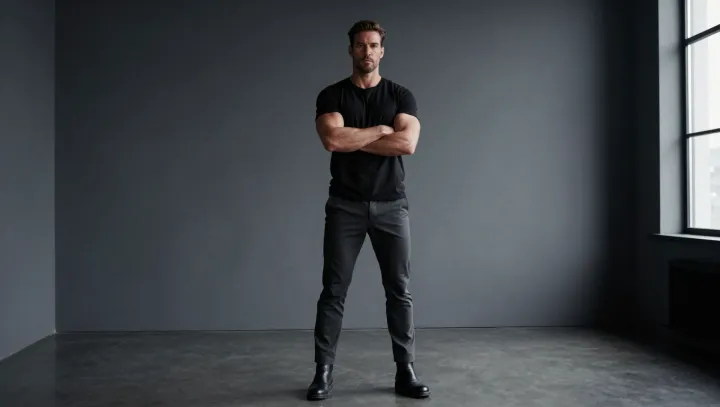
An all‑black suit announces rank before a single word or smile appears. The effect is not subtle; experiments using identical faces on different outfits show higher ratings of authority and lower ratings of warmth when the clothing is solid black, even under controlled lighting and posture.
Authority rises first because black compresses ambiguity. High luminance contrast against skin and background sharpens body contours, which boosts perceived control and dominance in observers’ rapid trait attribution, the so‑called thin‑slice judgment process. Social conditioning then layers on: black is paired with formal uniforms, security staff, judges, and ceremonial dress, so associative learning primes expectations of power and rule enforcement the moment the color blocks the frame.
Approachability drops for almost the same reasons. Color‑emotion research links black with threat, restraint, and social distance; unlike mid‑tone or warm hues, it offers no visual softness, no gradient for perceived self‑disclosure. The suit acts as a visual shield, a kind of textile armor, which triggers higher ratings of intimidation and lower scores on perceived agreeableness, even when facial action units stay neutral or friendly. The face says hello. The suit says do not interrupt.