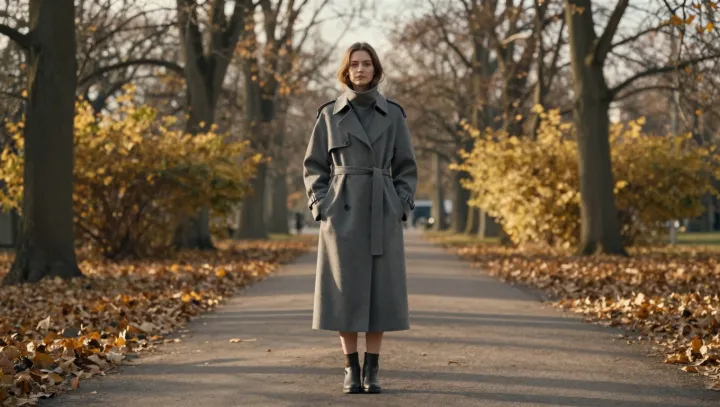
Broken rules often look truer than polished ones. The tilted horizon, the amputated elbow at the frame edge, the face drifting far from the rule-of-thirds grid, these are the scars that make famous photographs feel alive. Classic composition manuals promise balance and harmony, yet the images that lodge in collective memory often lean into imbalance, visual tension, even mild error.
What seems like sloppiness is usually a precise bet on the brain. Human vision runs on saccades and peripheral blur; the fovea samples detail in jumpy bursts, while the rest of the retina supplies low-resolution context. When a frame slices through a body or lets a key subject hover too near the margin, it echoes that discontinuous sampling, so the visual cortex and its predictive coding machinery read the picture less as a staged tableau and more as a frozen slice of lived perception.
The supposed violations also hack attention. A centered subject satisfies Gestalt expectations and lets the eye relax too quickly. Shift that subject off axis, or let a lamppost intrude into foreground space, and the viewer is forced into active scanning, engaging mechanisms like figure–ground segregation and attentional salience. That extra cognitive effort is small but memorable, which is why so many celebrated frames look, by textbook standards, slightly wrong yet feel, to the nervous system, exactly right.