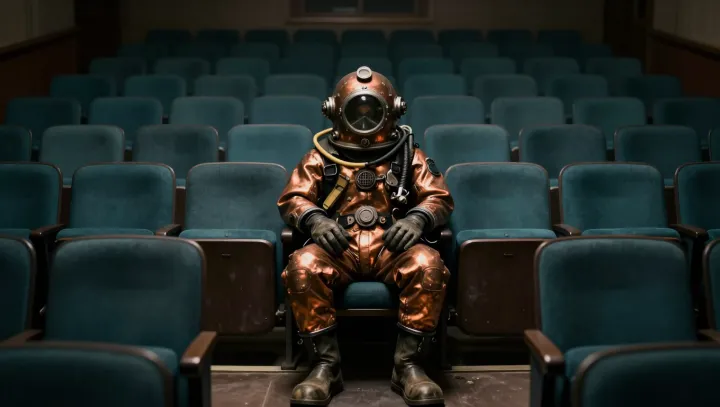
An empty cinema can say more about collapse than any chart. On screen, climate films stack graphs and expert voiceovers; in that lone diver, sealed in gear and surrounded by vacant seats, the image cuts straight to extinction logic with no subtitles required.
The sharper claim is this. Data-heavy documentaries obey the grammar of policy reports, turning atmospheric chemistry and trophic cascades into digestible bullet points that soothe more than they alarm, while the diver shot weaponizes absence itself. No crowd. No shared witness. Just one body prepared for a hostile medium, sitting where communal stories once mediated risk, as if collective narrative has already failed its survival function.
More accurate, yes. Because ecological collapse is not a single spike in carbon dioxide parts per million, but a systemic unraveling of feedback loops, food webs, and social cohesion, and that is exactly what the theater frame encodes. The diver’s breathing apparatus hints at hypoxia and ocean acidification without naming them; the auditorium’s stale air mirrors stagnant politics; the empty rows visualize species loss and demographic retreat more honestly than any animated infographic.
The unsettling point is this. Viewers do not need a narrator to explain cognitive dissonance or shifting baseline syndrome when the only audience for disaster imagery is someone already dressed for submersion, watching a screen no one else came to see. The shot collapses spectator and victim into one figure, then quietly asks whether human culture will keep filming its own disappearance in high definition, long after the crowd has left the room.