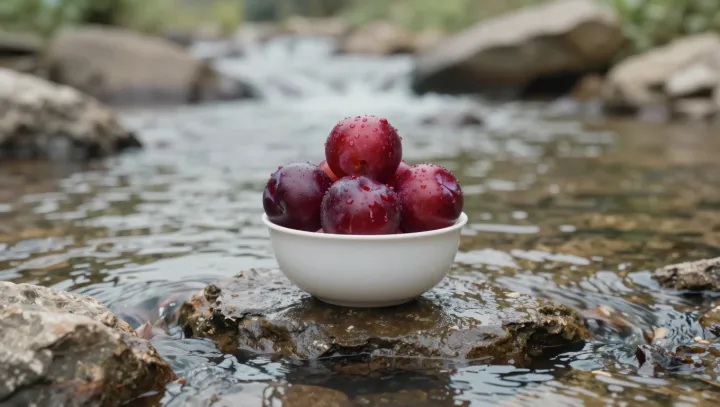
Cold creek water does not just chill plums; it edits them. In those minutes under the current, temperature swings rewrite the balance of sugars, acids and aromas that the tongue and nose register as sweetness and freshness.
The counterintuitive part is this: the actual sugar concentration barely changes, but your brain decides the fruit is sweeter. Rapid cooling slows diffusion of malic acid and other organic acids toward the surface, while sucrose and fructose, already dissolved in cell sap, still hit your taste buds fast once you bite. With acidity briefly muted at the interface, the sugar-to-acid ratio your senses perceive shifts upward, so sweetness wins the argument even though chemistry on the spreadsheet looks almost static.
Firmness is no mystery; cold is a structural ally. Lower temperature reduces pectin-degrading enzyme activity and stiffens cell membranes, so the cell walls resist rupture and the flesh snaps instead of smearing. Aroma behaves differently again. Volatile esters and aldehydes evaporate more slowly from a chilled surface, so fewer are lost to the air while the fruit waits in your hand. Bite quickly after the plunge and you release that pent-up headspace of trapped volatiles in one concentrated burst, which the brain reads as a cleaner, brighter flavor than a warm, slowly leaking plum ever delivers.