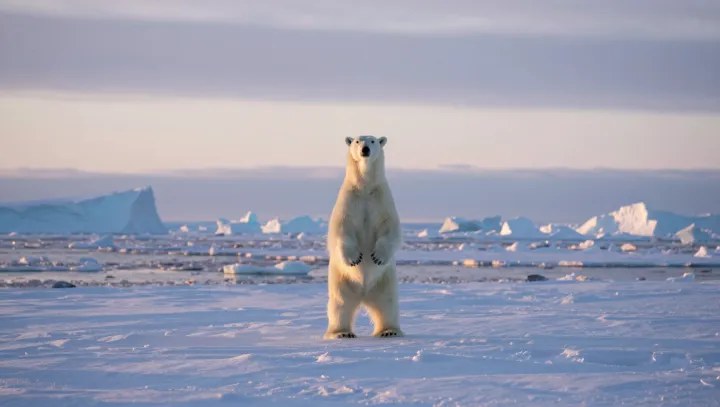
Polar bears are not ice spirits; they are hacked brown bears running a different biological script. A few key mutations, not a slow cosmetic drift, flipped their survival strategy toward fat, cold, and distance. Genomic studies show dozens of genes under strong selection in energy metabolism, cardiovascular function, and coat structure, sketching a rapid pivot away from forest life.
The real surprise is that insulation, which should cook a bear in a temperate forest, became its main asset on sea ice. Hollow guard hairs, dense underfur, and thick blubber cut convective and conductive heat loss so sharply that the animal can lie on ice like a living thermos. Behind that, mitochondrial oxidative phosphorylation and lipid catabolism pathways are tuned to burn seal blubber as the primary fuel, turning each hard-won kill into a long-range energy battery rather than a short sugar spike.
Even the head advertises this evolutionary gamble. A longer skull, narrower molars, and stronger canines trade grinding power for grip and puncture, matching a diet of seals instead of mixed vegetation. Large, furred paws spread weight and increase friction on melting ice, while a streamlined torso and buoyant fat layer support long swims that justify the label “marine” predator. What began as an overheating omnivore now moves across broken ice with minimal energy leak, its entire anatomy optimized to chase fat in a thinning frozen habitat.