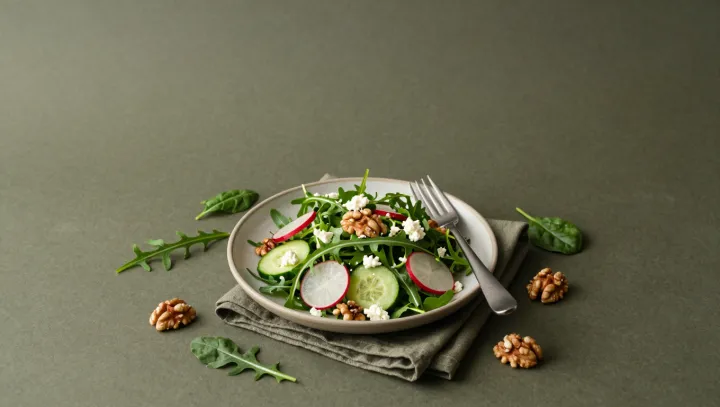
A bare salad is often a bad weight loss tool. Leaves and low fat dressing look virtuous, yet they trigger a biological setup for rebound eating. Without enough fat and protein, key signals like cholecystokinin and peptide YY stay muted, gastric emptying speeds up, and appetite returns fast.
The sharper move is counterintuitive: add nuts and cheese. Yes, calories rise. But so do protein and unsaturated fat, which improve satiety per calorie by engaging gut–brain pathways and moderating post‑meal insulin. With higher chewing effort, lower energy density than many processed snacks, and more stable blood glucose, the dressed‑up salad can replace later grazing that would quietly overshoot the same energy intake.
The real failure is not the handful of almonds or feta; it is treating them as extras rather than anchors of the meal. When portions are planned and the salad becomes a complete, high protein, high fiber plate, people tend to report fewer cravings, lower hedonic hunger, and better adherence to a calorie target over time. The calorie ledger stays the same; the biology that helps you stick to it does not.