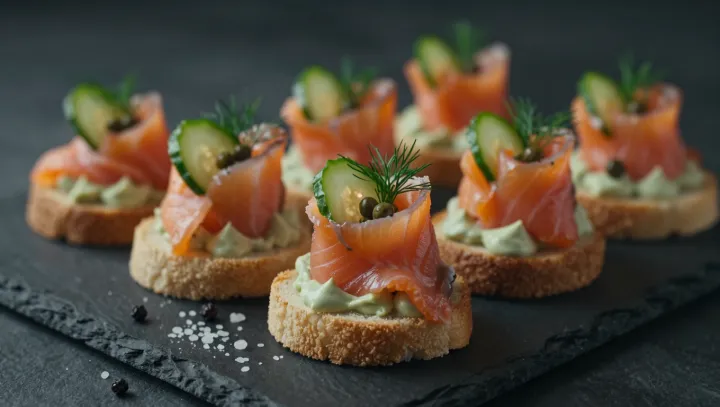
On a good canapé, richness is an illusion built with lab precision. One coin of toast. A smear of fat. A shard of salt. A breath of cold. Then the bite detonates far larger than it looks.
The trick, chefs quietly know, is that order beats size. First the crisp base fractures, sending mechanical signals through periodontal mechanoreceptors while keeping fat off the tongue for a heartbeat, so texture sets the stage. Then comes fat, sliding in as a thin, warm layer that melts fast, flooding taste buds and triggering lipophilic aroma compounds to volatilize and rush upward into retronasal olfaction, where the brain writes its story of luxury.
Only after that does salt strike hard. Placed on top or as large crystals, sodium ions hit epithelial sodium channels in a quick spike, sharpening the perceived body of the fat and masking any bitterness that small garnishes might carry. Temperature seals the trick. A cool topping over a slightly warmer base slows fat solid-to-liquid transition just enough to stretch the experience, modulating trigeminal nerve responses so the bite feels both clean and indulgent. Richness, it turns out, is not about volume. It is about choreography measured in millimeters and milliseconds.