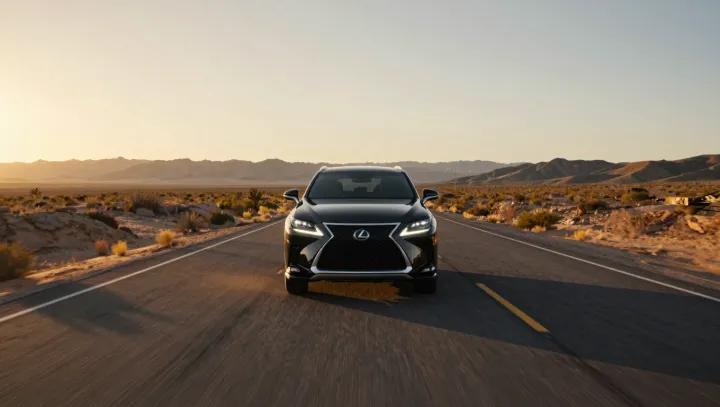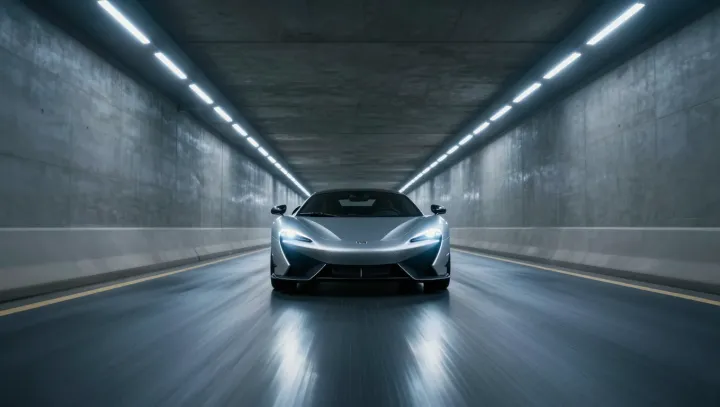
Blurred asphalt sets the rule before any driver does. At 200 mph, the car covers almost a football field in the time it takes the brain’s visual cortex to process a threat and send a signal through the motor neurons. That delay, measured in fractions of a second in laboratory reaction-time tests, quietly eats hundreds of feet of potential braking distance before a toe even twitches.
Veteran drivers insist this makes eyesight, not courage, the first brake. Headlight throw, track sightlines and simple line of sight geometry decide whether a hazard appears within the remaining stopping distance defined by kinetic energy and friction. Because braking force must overcome that kinetic energy, which scales with the square of speed, a modest increase in indicated speed turns into a brutal jump in required distance on any coefficient-of-friction chart.
Even then, grip becomes the second, harsher veto. Tire compound, contact patch temperature and downforce set the ceiling for deceleration long before a pedal reaches the firewall, as tire engineers model with friction circles and load sensitivity curves. Beyond that lies space itself: runoff area, guardrails and traffic gaps dictate the final margin, so the car is effectively out of options while the driver still feels in control, an illusion that ends only when physics finishes its quiet, unforgiving arithmetic.