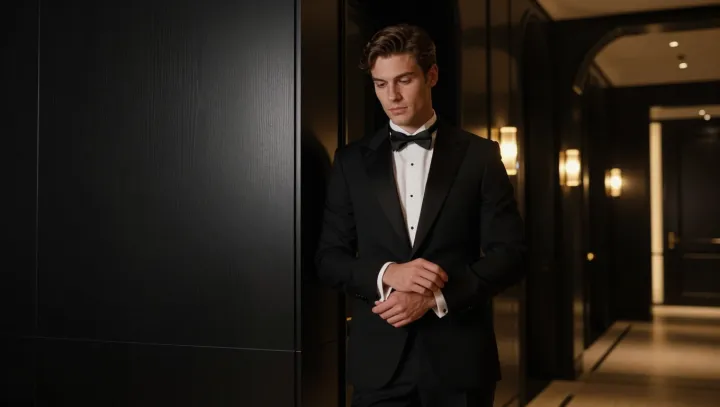
Black fabric against white shirt does something brutal to the brain. Before a face is even processed, the visual system locks onto contrast, symmetry and tailoring, then routes that pattern into social categories built over a lifetime of hierarchy and ceremony.
The hard truth is that a tuxedo rides cultural bias like a shortcut. Studies using rapid forced‑choice tasks show observers rate the same male face as more competent and higher status when framed by formal evening wear than by casual clothes. In those experiments, judgments land within a few hundred milliseconds, inside the window dominated by the fusiform face area and early activity in the ventral visual stream, long before any conscious story about character can form.
Status, here, is not argued. It is inferred. Formal tailoring signals resources, occasion and group belonging, and the brain’s thin‑slice machinery converts those cues into expectations about leadership potential and decision authority. Social cognition research calls this trait inference from minimal cues, and it operates like a heuristic compression algorithm on limited visual data, trading accuracy for speed. So a tuxedo does not change the man. It changes the default file his image is saved into in other people’s minds.