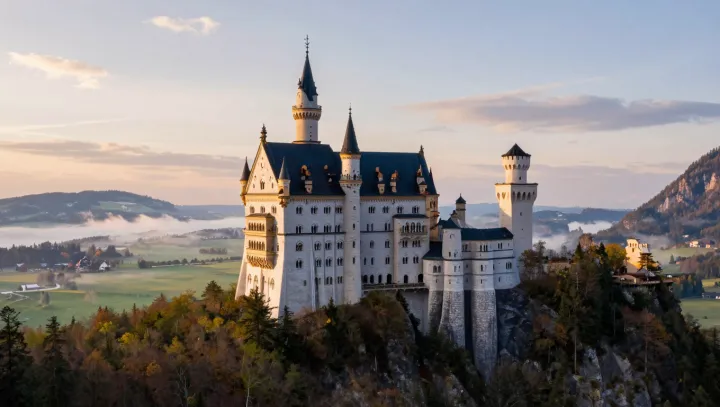
Stone walls lie. Inside this famous hilltop castle, hidden behind limestone and turrets, runs a skeleton of steel beams, pressurized water pipes and central heating that would have baffled any real medieval mason. The project fused Gothic revival aesthetics with industrial engineering, turning a late royal fantasy into something closer to a stage set than a feudal stronghold.
The trick works because visitors rarely want a lesson in structural engineering; they come seeking a story, and the building obliges with pointed arches, battlements and storybook silhouettes that match centuries of romantic painting. Load‑bearing steel and modern plumbing remain backstage, much like counterweight systems and fly lofts in a theater, where mechanical advantage and structural frames do the work while the audience stares at painted flats.
Tourism economics then sealed the illusion. Guidebooks, postcards and later film studios recycled the same dramatic profile, reinforcing a visual template for what a fairy‑tale fortress should be. Conservation practice preserved the modern infrastructure for safety yet foregrounded murals, throne rooms and mountain views. So millions walk through an industrial‑age artifact and exit convinced they have brushed against the Middle Ages.