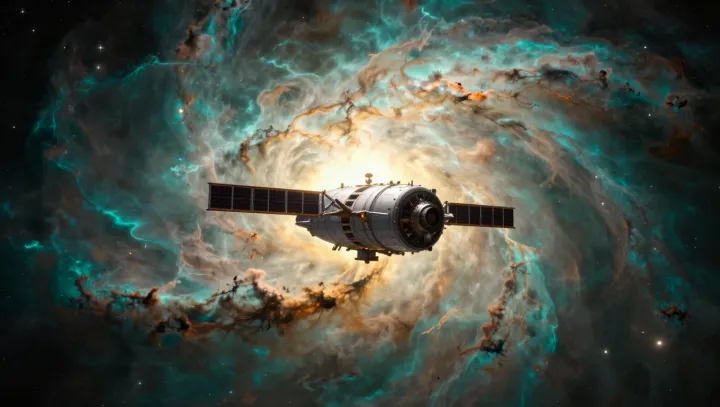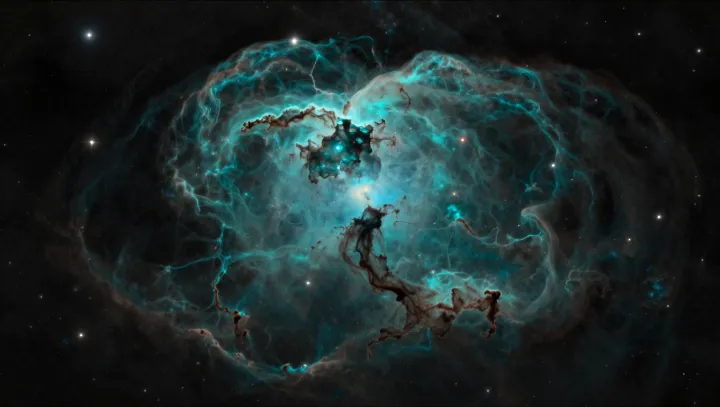
Glowing gas clouds make loneliness look irrational. Those nebulae are not abstract art; they are active chemical factories where carbon chains, amino acids, and complex organics form under ultraviolet radiation and shock waves, using the same periodic table that later assembles into cell membranes and ribonucleotides on rocky worlds.
The odds tilt hard against a barren cosmos. Spectroscopy keeps finding water vapor, methane, and carbon monoxide in exoplanet atmospheres, while interstellar ices carry formaldehyde and hydrogen cyanide, the classic feedstock for prebiotic chemistry, and those reactions, governed by thermodynamics and reaction kinetics, run wherever temperature and pressure fall into broad, forgiving ranges.
The strange view is that life happened once and stopped. Star formation recycles these molecules into billions of planetary systems, and with each protoplanetary disk mixing silicates, volatiles, and organics, the number of chemical trials climbs so high that a single success demands either a hidden prohibitive barrier in abiogenesis or an improbably selective universe that lights nebulae with the very ingredients it refuses to animate.