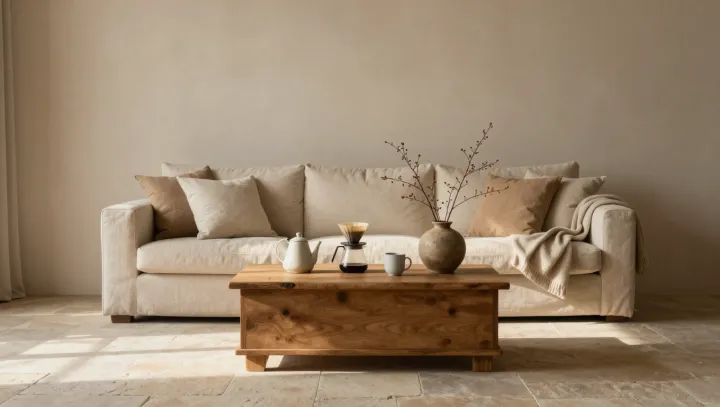
Flat beige cloth on a hanger looks anonymous; under a lens, it can behave like armor. When an outfit stays within a narrow band of hue but a deliberate range of brightness, it stops competing with its own background and starts sculpting the body as a single, readable form for the sensor.
The bolder the color mix, the more visual noise you actually introduce. Strongly saturated blocks scatter attention across the frame, while cameras respond first to luminance contrast and edge definition, not to hue itself, so a monochrome neutral look with controlled light–dark steps often produces a cleaner figure–ground separation than a rainbow of tones.
The real trick is how neutrals manage dynamic range and specular highlights. Soft taupes, oatmeal and stone bounce light in a tighter band of exposure, letting skin sit in the optimal midtones where facial micro‑contrast and texture look sharper, and that uniform surface gives editing tools more latitude to boost clarity without clipping channels or blowing out one aggressive shade.
There is also a psychological payoff that registers on camera. When clothing recedes into a quiet gradient, viewers default to the brightest, highest‑contrast zone in the frame, which is usually the face; the outfit becomes a calibrated backdrop, and the person reads as more striking even though the palette whispers.