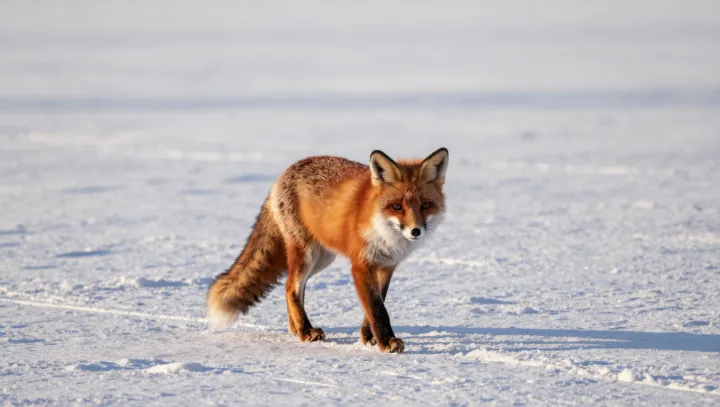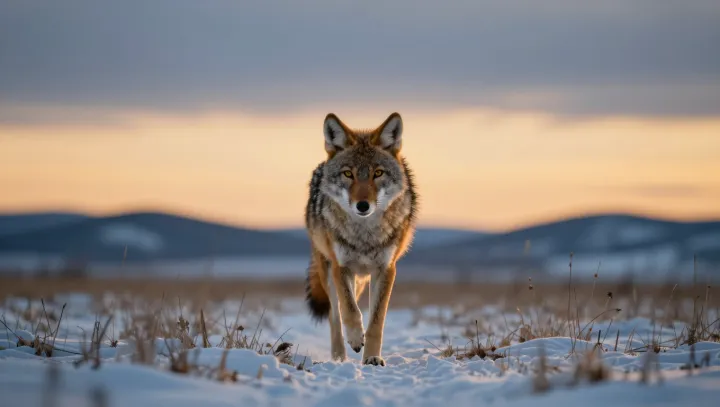
Empty white ground gives the coyote a strange advantage: it can afford to avoid bravery. In that exposed snowfield, speed bleeds away in deep drifts, and sprint muscles are a bad investment compared with hardware that never tires. Oversized pinnae act as parabolic dishes, rotating to catch faint footfalls or the wingbeat of a raptor far beyond visual range, while the auditory cortex filters those signals from the background hiss of wind.
Cowardice, in biological terms, pays. Predators and rivals stand out on snow, but they also close distance fast, so the only winning game is not to enter the contest. The coyote’s olfactory epithelium, packed with millions of receptor cells, samples air currents for volatile compounds shed by wolves, humans, or carrion, building a chemical map long before any shape appears on the horizon. That sensory reach creates a moving buffer zone: detect, sidestep, stay alive.
Strength, by comparison, is a vanity metric. An extra bite force does little when a larger carnivore has already locked the exit routes, yet a marginal gain in signal-to-noise ratio at the ear or nose can buy precious seconds to slip away or reroute a hunting path. On open snow, the coyote’s best defense is not dominance but information, gathered at distance and cashed in as absence from the fight.