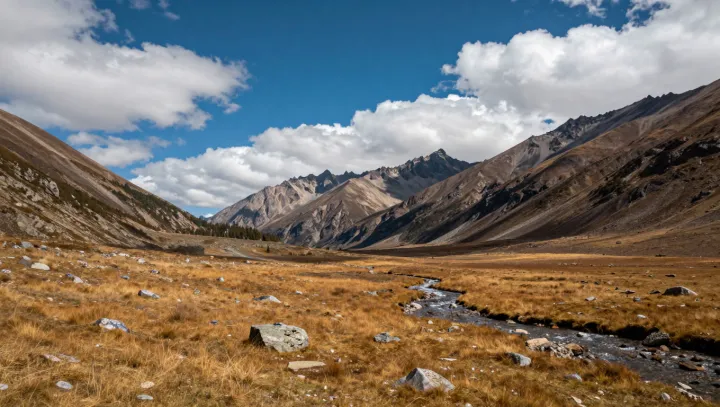
Bare rock makes the boldest claim here. This roadless mountain valley, stripped of pavement and heavy construction, offers scientists a continuous field record rather than a patchwork of disturbed sites. Every ridge, bench and boulder becomes part of a readable log, a sequence written not in ink but in contacts between granite, sediment and thin alpine soils.
The real surprise is how orderly that story is. Glacial geomorphology turns moraines, cirques and U shaped troughs into markers of former ice extent, while cosmogenic nuclide dating clocks exposure times for boulders left behind by retreating ice. Add stratigraphy in river cutbanks, with stacked gravel, silt and organic horizons, and researchers reconstruct cycles of incision, infill and renewed erosion with unusual precision.
Even the tundra is opinionated. Patterns of permafrost, ice wedges and patterned ground encode freeze thaw dynamics, and plant communities track temperature and moisture regimes across slopes and elevations. Because roads, dams and clear cuts are absent, modern hydrology still aligns closely with topography and rock structure, letting climate models tie stream chemistry and discharge directly to long term weather records and to landforms shaped under colder, icier skies.