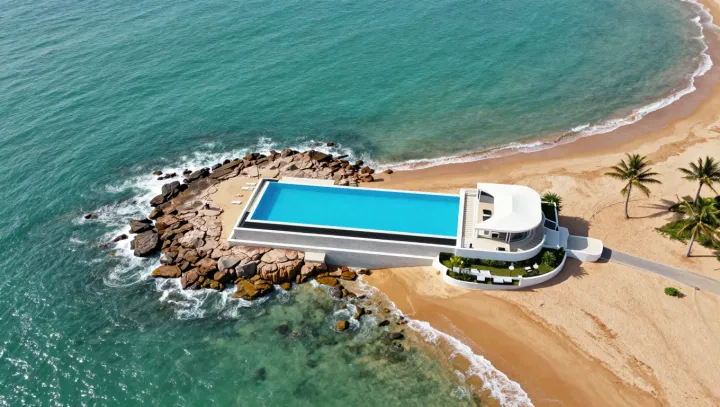
Serenity at the waterline is usually an engineered lie. Along new coastal pool complexes, glassy surfaces sit on calculations first made for steel hulls and concrete sea walls, not for sun loungers. Wave impact spectra, once aimed at cargo safety, now set the geometry of infinity edges and tidal inlets that appear almost casual.
Designers argue that comfort starts with overdesign. Using hydrodynamic load models and slamming pressure curves taken from ship hull research, they size pool shells and transfer beams so that a deck that feels weightless to swimmers can resist short‑period storm bursts without visible distress. Rock outcrops are no longer ornamental piles; they follow breakwater formulas, with armor units placed to disrupt wave coherence before energy reaches shallow steps.
The apparent leisure is in fact a disguised control system. Computational fluid dynamics runs, originally commissioned for harbor sea walls, now refine overflow slots, scour pads and energy dissipation basins beneath the loungers. By matching local significant wave height data with fatigue design curves, engineers hide sacrificial edges and pressure‑relief joints inside the coping. The result looks like a resort postcard yet behaves, under storm‑level forcing, much closer to a small coastal defense work.