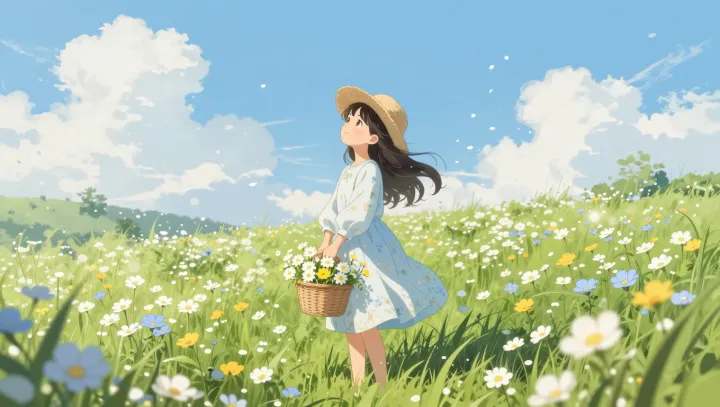
A blue dress in a flower meadow does more psychological work than any smiling face. Around it, warm petals flare, grass glows, air seems softer; the body inside almost becomes secondary, a carrier for chromatic data that the eye rushes to interpret as freshness and ease.
Youth here is not a biography; it is a contrast function. Cool blue against yellow and green drives opponent-process neurons in the retina to boost saturation, so skin looks clearer, limbs seem lighter, posture appears almost spring-loaded. Short hem, clean lines, no visual noise. The Gestalt principle of figure–ground pushes the dress forward as a single, coherent sign of vitality, even if the wearer stands still and tired.
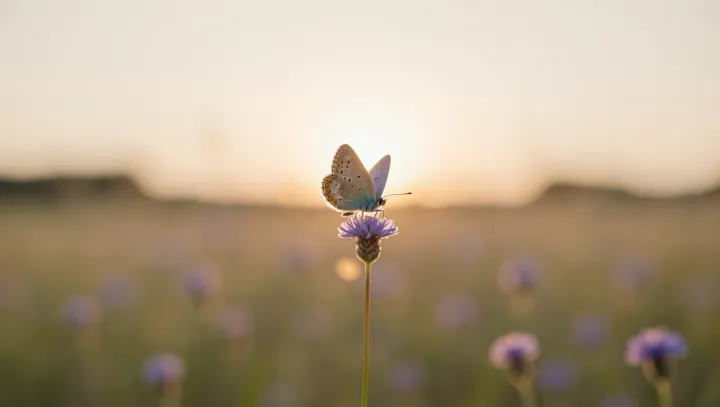
Warmth is faked just as neatly. A straw hat, with its coarse weave and sun-bleached hue, triggers stored schemas of harvest, leisure, low stakes. Texture matters. Diffuse edges and porous brim scatter light, softening cast shadows on the face; that micro drop in contrast cues comfort in the visual cortex. Surround this with a meadow and you get ecological framing: viewers import memories of holidays, pollen scent, open skies. The scene becomes a cognitive shortcut, a kind of emotional color grading that upgrades ordinary youth into something almost impossibly gentle.