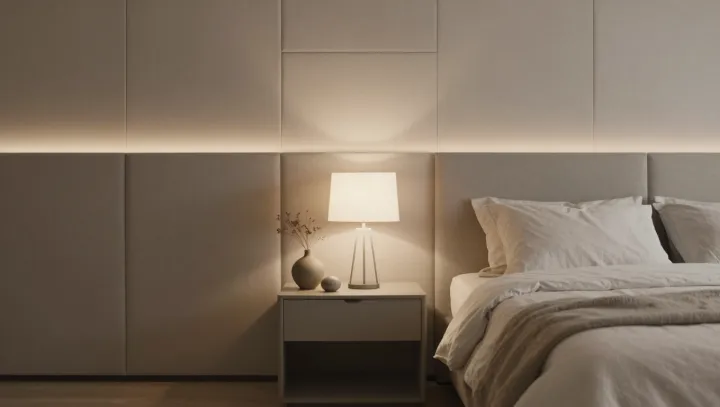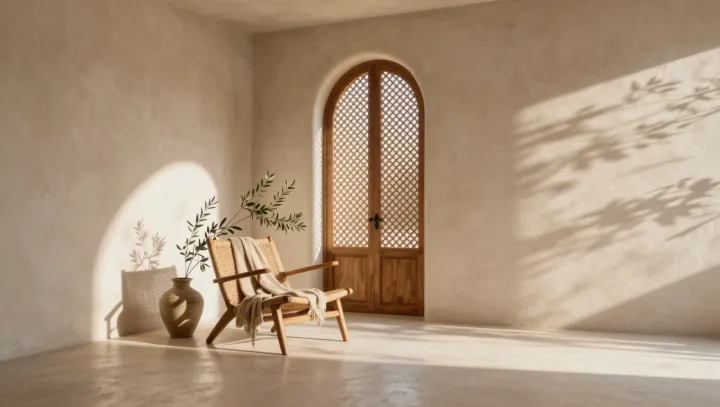
Light on splintered wood can feel more generous than empty square footage. In a small reading corner, the brain gets something it rarely finds in a stripped, spotless living room: clear sensory instructions. Rough grain, woven fibers, a visible beam of sun. Each cue tells your visual cortex exactly where to rest.
The core mistake of extreme minimalism is simple: it confuses physical space with mental bandwidth. Large blank surfaces force the brain’s predictive coding machinery to keep scanning, because there is almost nothing concrete to model, so attention circuits keep looping. In a compact nook, micro-variation in texture and light gives the visual system enough structure to stabilize, which reduces activity in threat-monitoring networks and quiets the constant search for “what’s missing.”
Natural materials then do a second, quieter job. Patterns in wood grain and woven plant fibers echo the fractal geometry common in forests, which research links to lower sympathetic arousal and smoother heart rate variability. Sunlight hitting uneven surfaces drives gentle shifts in luminance that support circadian rhythm signals and help the default mode network slip into a more relaxed, associative state. Small corner, short distance to every object, predictable edges, soft acoustic absorption from fabric. To the nervous system, that combination reads not as cramped, but as safe, legible, and surprisingly wide inside.