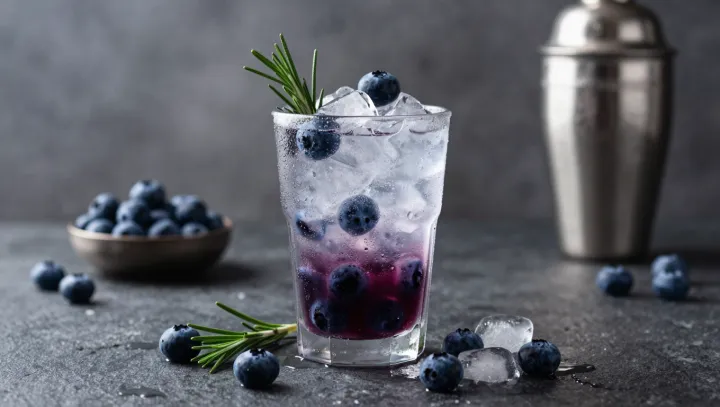
Cold, not sugar, is the real sweetener here. When ice drops the temperature of a blueberry drink, it slows taste receptor kinetics on the tongue, dulling bitterness and sourness more than sweetness, so the remaining signal feels skewed toward sweet even though sugar content is unchanged.
Dilution looks like the enemy of flavor, yet in a dense blueberry purée it can act as a quiet editor. By reducing viscosity and concentration, melting ice lowers the impact of organic acids and tannins that carry astringency, while keeping sucrose and fructose well above their detection thresholds, so the contrast tilts in favor of sweetness.
The bigger trick comes from the nose. As the drink cools and then gently warms in the mouth, volatile esters and terpenes responsible for blueberry aroma are released in a staggered pattern, feeding the olfactory system a clearer fruit signal; sensory research calls this retronasal olfaction, and the brain routinely mislabels strong fruit aroma as extra sugar.