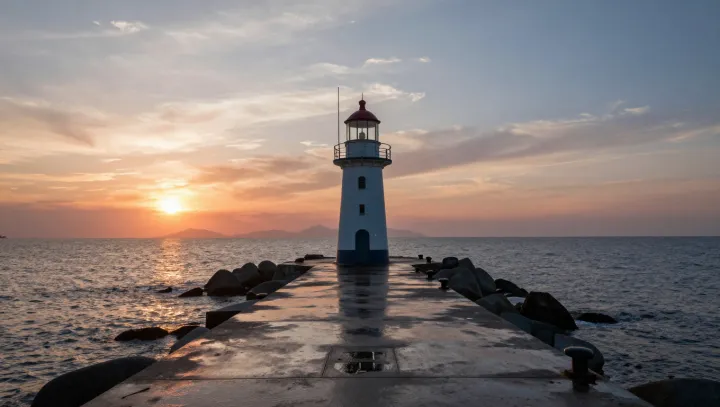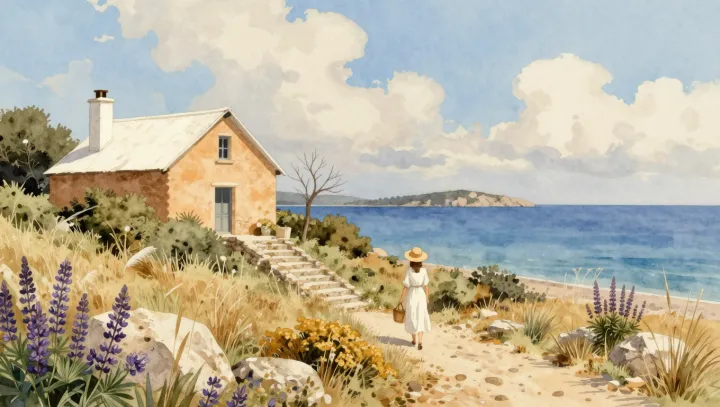
White paint loses here. Along a painted shore, the sharpest flare often arrives where the brush has stopped: bare paper preserves its original luminance while pigment, however pale, absorbs part of the incoming spectrum and interrupts the clean return of light. The blank is not emptiness. It is the paper's unmasked surface.
This is optics, not sentiment. In watercolor, transparent washes rely on diffuse reflection, as light enters the paint film, meets paper fibers, and returns through layers of pigment; each layer reduces intensity, especially when several washes overlap. White gouache can restore a highlight, but it often shifts the effect from salt-bright glare to an opaque mark. The eye notices that difference fast.
Restraint does the expensive work. A reserved strip of paper can suggest specular reflection on wet sand, foam, or a distant wave because its edges are shaped by surrounding color rather than covered by it. Nothing has been added. At the waterline, light seems strongest precisely where the hand has chosen not to speak.