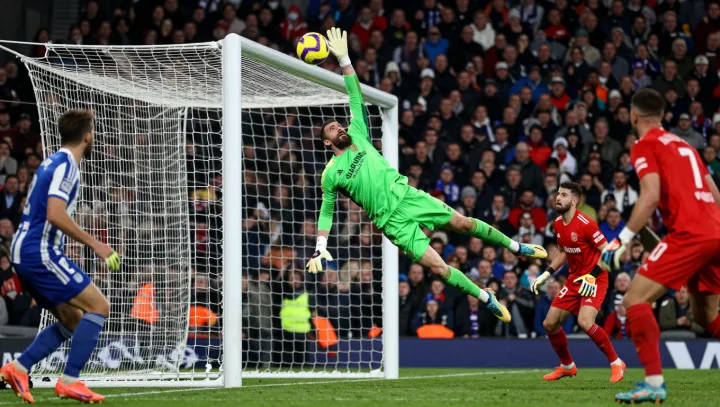
The save begins before impact. In the fraction before a boot meets the ball, the goalkeeper has often read a private grammar: hip angle, planted foot, torso rotation, and the ball's preceding roll disclose likely direction before speed makes reaction alone inadequate. Reflex arrives late.
This is not magic. Goalkeeping is a wager placed on kinematics, because a striker leaning across the ball, opening a shoulder, or setting the ankle at a certain angle narrows the range of plausible outcomes even before contact. Optic flow matters. As the ball approaches or shifts laterally, its changing visual pattern helps the keeper estimate pace, line, and bounce, while anticipatory postural adjustments place weight on the foot that can launch first. Position follows prediction.
That distinction is unforgiving. A keeper who waits for a clean sight of the shot has already surrendered ground; one who commits too early becomes vulnerable to disguise, deflection, or a late change of shape. The net records only the dive. But before the ball is airborne, the argument has often already been made in the striker's posture.