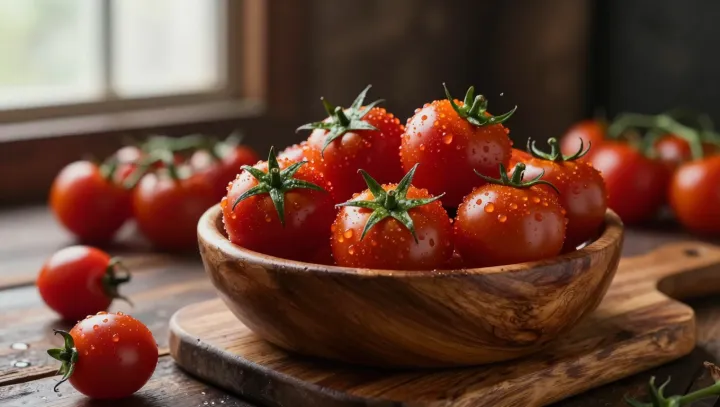
Cherry tomatoes deserve heat. Although their fresh crunch gets most of the attention, cooking them with a little oil can make their lycopene easier for your body to absorb. Size tells you little. This red carotenoid pigment sits within plant tissue, which softens during cooking and releases more of its contents for digestion.
Oil earns its place. Because lycopene is fat-soluble, dietary fat helps it enter mixed micelles, the microscopic structures that carry fat-soluble compounds toward the intestinal lining for absorption. Heat helps differently. By disrupting the tomato's cellular structure, cooking can increase lycopene bioavailability, meaning the share that becomes available for your body to absorb and use. Results still vary. The amount absorbed depends on the tomatoes, their preparation, the rest of your meal, and individual digestion, so no single cooking trick guarantees a fixed nutritional return.
Keep the method simple. When you soften halved cherry tomatoes in a pan with a little olive oil, you combine tissue breakdown with a source of fat without needing elaborate equipment or a long ingredient list. Stop before they scorch. A glossy spoonful over beans, eggs, or pasta makes this an ordinary meal choice rather than a supplement strategy, and there is no need to drown the tomatoes in oil. Raw still counts, too. Since uncooked tomatoes supply nutrients and cooking can reduce vitamin C, the sensible choice is variety, not declaring one preparation the winner. Why not give your next handful a turn in the pan?