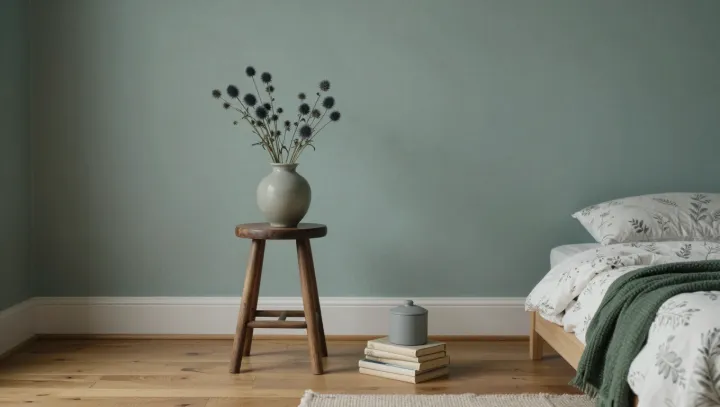
Clutter is a lousy roommate. A bedside table buried under chargers, books, and half-used bottles turns the first glance into a tiny inventory, while an unbroken patch of floor gives the eye somewhere to land. The room has not grown. Yet you can feel less boxed in when fewer objects compete for notice.
Subtraction beats another purchase. In a small bedroom, visual clutter creates cognitive load: the brain must sort colors, edges, labels, and unfinished tasks even when you only want sleep. Start with the loudest surfaces. You can move laundry, cords, receipts, and duplicate decor out of sight, then keep only objects that earn their place through use or real affection. One clear shelf works. So does a nightstand holding a lamp, a book, and water.
Storage is not the whole answer. Stuff hidden behind doors can still return as a daily avalanche, so give each remaining item a fixed home and leave some space deliberately empty. Empty space is doing work. It improves sightlines, reduces attentional capture, and makes the room read as one place rather than a pile of competing zones. You are not decorating less. You are editing harder. Would you rather wake up to a display, or a place that lets your mind unclench?