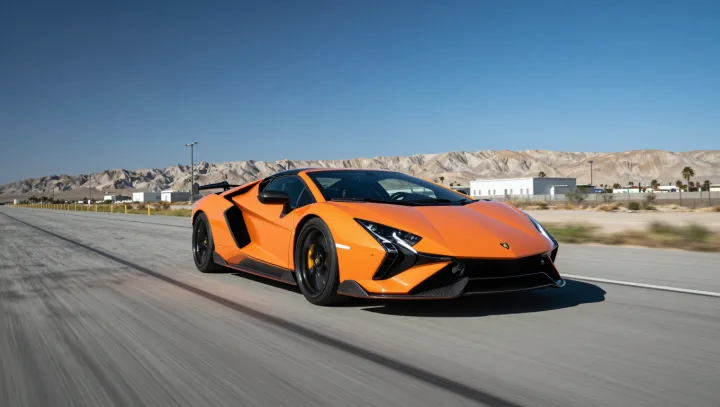
Thunder gets electrical assistance. The Lamborghini Sian Roadster keeps its naturally aspirated V12 at the center of the experience, while a supercapacitor, rather than a conventional hybrid battery, supplies its electric contribution. This is selective electrification. Instead of exchanging combustion drama for silent distance, the roofless machine uses stored electrical energy to sharpen the delivery of an engine that still dominates proceedings.
The distinction rewards precision. Whereas batteries store energy through electrochemical reactions, a supercapacitor stores it electrostatically, allowing rapid charging and discharging but holding less energy than a battery of comparable mass. Power outranks endurance here. The Roadster's 48-volt electric motor contributes 34 metric horsepower, working with a 785-metric-horsepower V12 for a combined output of 819 metric horsepower. Braking feeds the reserve. Through regenerative braking, the motor recovers energy that would otherwise become heat, replenishing the supercapacitor for subsequent acceleration rather than building a reservoir for extended electric travel.
The compromise is revealing. Because this storage system favors brief bursts over sustained supply, its value lies in acceleration assistance and smoother torque delivery, not in making the Roadster an electric commuter. Combustion retains the lead. The motor's integration into the transmission allows electrical assistance to support the driveline, including during gear changes, while the V12 supplies the overwhelming share of propulsion. Silence was never promised. Beneath an open sky, the car's electrical hardware works almost anonymously, leaving a more interesting contradiction hanging in the air: an exercise in energy recovery whose most memorable signature is still thunder.