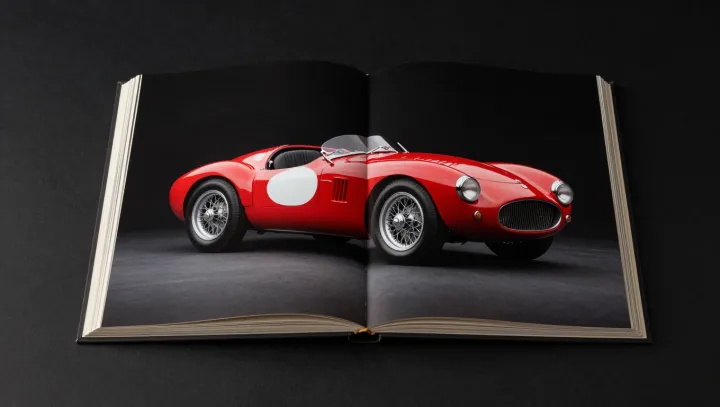
Horsepower takes second place. Limited to just 99 copies, Ferrari Endurance makes its subject the company's evolution, using photographs and documents rather than engine output as the organizing idea. Paper carries the argument. With a foreword by Ferrari Chairman John Elkann, the book places corporate history where performance figures usually command the reader's attention.
Scarcity is not scholarship. A print run of 99 establishes rarity, but the more interesting proposition lies in archival documentation, which asks readers to consider how a company becomes recognizable across changes in its products and identity. The distinction matters here. Photographs offer material for interpretation, while documents can supply context that a car's specifications, however impressive, cannot provide on their own. Provenance deserves equal attention. For collectors, the question is not merely how few copies exist, but how clearly the publication identifies and presents the historical material on which its account depends.
Authority has its limits. Elkann's foreword gives the volume a connection to Ferrari's leadership, although that connection should be distinguished from the evidence supplied by the photographs and documents themselves. Read beyond the signature. The book's appeal rests on a shift in attention: away from what a Ferrari can do, toward what the company's recorded past allows a reader to understand. Silence changes the encounter. Where an engine invites an immediate response, a photograph or document asks for sustained looking, leaving the reader with a quieter question about how much of a machine's meaning survives when it no longer moves.