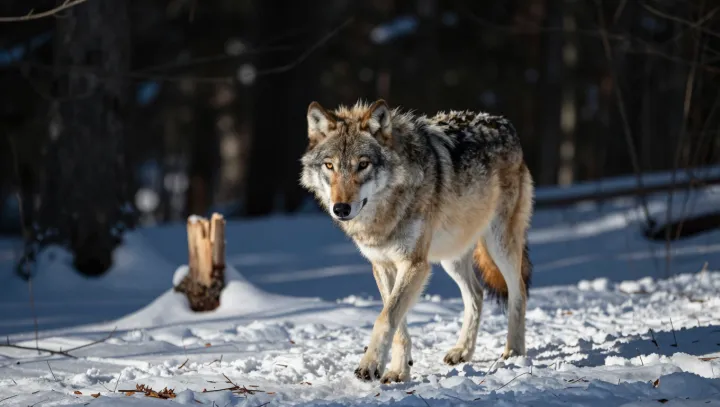
The throne is imaginary. Most wild wolf packs are families in which breeding parents guide their offspring, rather than rival adults competing for a crown through repeated combat. Parenthood explains the pattern. Although dominance relationships exist, treating every pack as a tournament mistakes the authority of experienced parents for the spoils of a permanent struggle among would-be rulers.
Captivity distorted the picture. Early descriptions drew heavily on captive wolves, where unrelated animals confined together could not disperse as they might in the wild, making competition unusually conspicuous. The distinction matters enormously. Field research, including work by wolf biologist L. David Mech, showed that a typical free-ranging pack contains a breeding pair and offspring from successive litters, not a collection of strangers awaiting promotion. Rank is not fiction. But calling the parents 'alphas' adds little explanatory value when their position usually follows from breeding and raising young.
Leaving often beats fighting. As young wolves mature, many disperse to seek mates and establish territories, so reproduction commonly requires founding another family rather than overthrowing their own parents. Cooperation pays within families. Through cooperative breeding and kin selection, offspring that help feed or protect younger siblings can support relatives carrying some of the same genes, while gaining experience before breeding themselves. Exceptions resist tidy labels. Some packs include unrelated members, multiple breeders, or changes after a parent's death, yet the ordinary scene remains less royal court than family table.