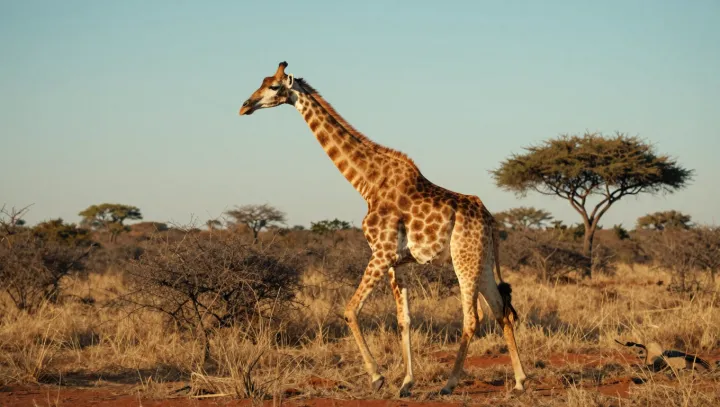
Height carries a lethal surprise. The legs that lift a giraffe toward leaves beyond many competitors' reach can also deliver a kick capable of killing a lion, turning feeding equipment into a formidable deterrent. Grazing is the wrong word. Giraffes chiefly browse trees and shrubs, with their legs supporting the elevated body beneath that famously long neck rather than gathering the food themselves.
Length alone explains little. When a giraffe kicks, muscle action rotates its limbs at the joints, generating torque and accelerating a hoof whose impact transfers kinetic energy into whatever it strikes. The hoof concentrates the blow. Its hard surface delivers that energy over a relatively small contact area, so a well-placed strike can fracture bone or cause severe internal injury, although no single outcome is guaranteed. Reach compounds the danger. A giraffe can strike with its forelegs or kick with its hind legs, leaving an approaching lion exposed even when it avoids the animal's head.
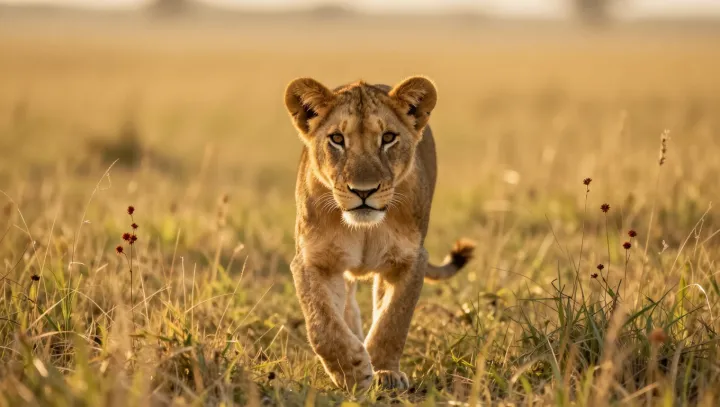
The defense has limits. Lions still kill giraffes, particularly calves, and coordinated attacks can exploit an animal's balance, exhaustion or difficulty protecting several approaches at once. Drinking exposes another weakness. To bring its mouth to water, a giraffe must spread its forelegs or bend them, adopting a posture that makes rapid movement and defense more awkward. Feeding height exacts its price. Beneath the branches, the same long limbs that advertise access to food draw a boundary a lion may cross only once.