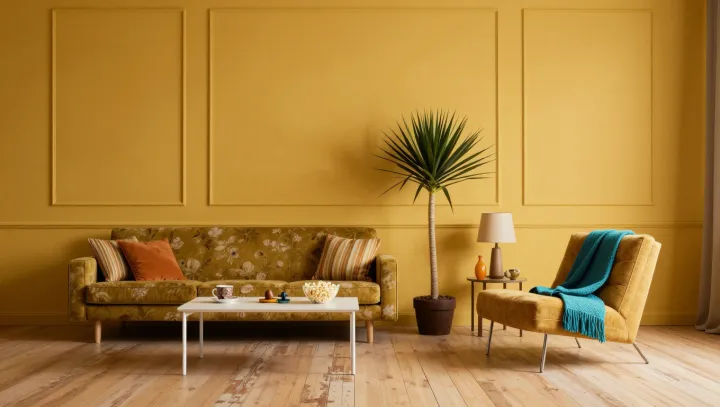
Yellow paint can turn unforgiving after sunset, even when the walls themselves have not changed. The difference is light. In a living room with tonal upholstery, paneled walls, a tall houseplant, and pale wood flooring, daylight can soften the palette while a poorly chosen lamp makes the same surfaces look glaring or oddly saturated.
The culprit is not brightness alone. Every light source has a spectral power distribution: the particular mix of wavelengths it emits. Daylight changes with the weather and the direction of the windows; lamps produce their own mix, which can alter how the paint reflects light to the eye. Color temperature describes whether a lamp appears warm or cool, but it does not tell the whole story. The color rendering index offers a separate indication of how faithfully a light source reveals colors compared with a reference source. Two bulbs with similar color temperatures can still make yellow look noticeably different.
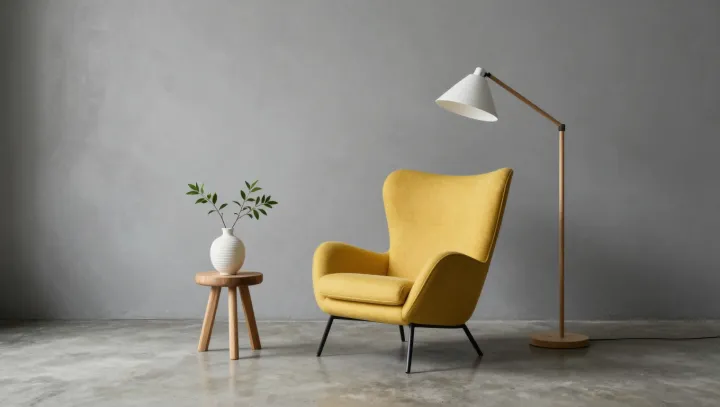
Restraint makes the better lighting plan. Test paint on several walls, then look at it in daylight and under the actual lamps, including those used beside the seating. Choose bulbs with good color rendering, and use shades or indirect lighting to reduce glare; a dimmer can help, provided it is compatible with the bulbs. The pale floor will reflect light back into the room, while the plant and upholstery add other colors for the eye to negotiate. Sample first. The most welcoming yellow is not a color chosen once, but a wall that must live with every light it meets.