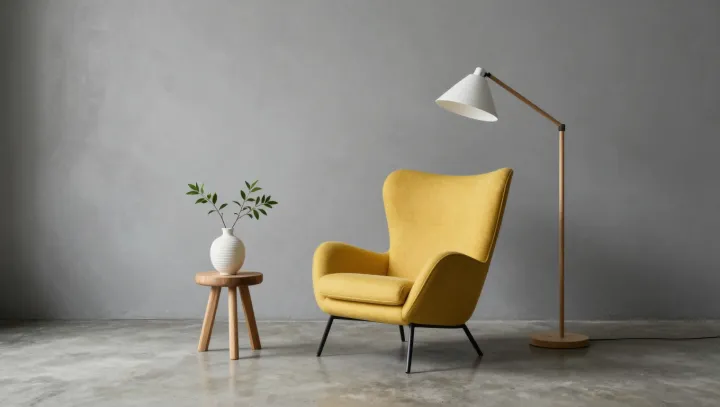
A yellow chair owes much of its impact to the gray behind it. The wall is no innocent backdrop: its undertone, brightness, and exposure to light can make the same upholstery seem electric in one room and subdued in another. The chair never changes. The conditions around it do.
Contrast is the first thing to inspect, not the paint name on the tin. A dark gray wall can make a lighter yellow chair stand out through differences in luminance, while a gray closer to the chair in brightness may soften its outline. Color matters too. Through simultaneous contrast, neighboring colors alter how each is perceived; a cool, bluish gray can make a warm yellow appear especially lively, though the effect depends on both shades. Lighting adds another variable: its color temperature and spectral distribution influence which wavelengths reach the eye after reflecting from the fabric and paint.
Restraint elsewhere gives the chair room to speak. Natural wood adds warmth without competing for attention, white accessories provide a visual pause, and greenery introduces a contrasting color that can make the arrangement feel less rigid. Test before committing. Place a large paint sample behind the chair and examine it in daylight and under the lamps used in the room, since neither a small swatch nor a store display can reproduce those conditions reliably. In the end, the wall holds its silence, and the chair appears to raise its voice.