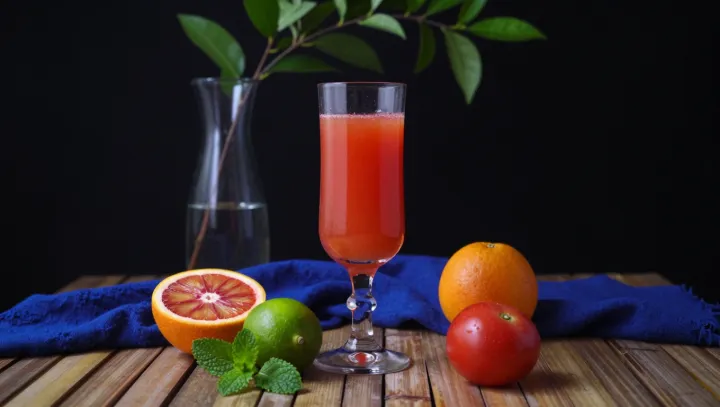
Juice is not an orange in disguise. Although a glass and a piece of fruit can contain similar sugars, the route from mouth to bloodstream differs: one is swallowed quickly, while the other demands chewing and delivers its sweetness within a structure of plant cells and fiber.
Speed changes the bargain. Chewing whole fruit takes time, and its dietary fiber and intact tissues can slow digestion and the absorption of sugars, contributing to a more gradual blood glucose response. Juicing disrupts much of that structure and removes some fiber, particularly when the pulp is strained out. Yet the comparison is not a verdict on every glass: portion size, pulp, accompanying foods and individual metabolism all influence the glycemic response. An orange eaten after a meal and juice consumed alone need not produce the same pattern as either consumed under different conditions.
Fullness follows its own rules. Whole fruit generally offers more chewing and bulk, signals that help promote satiety, while liquid calories can be consumed rapidly and may leave people less satisfied. A glass can also contain the juice of several oranges, making it easy to drink more sugar than one might eat in fruit. Juice still supplies nutrients, including vitamin C, and a modest serving can fit into a balanced diet. But when the aim is to stay satisfied between meals, the whole orange usually has the advantage. On the table, glass and fruit sit side by side; inside the body, they keep different time.