The hollow center of a French cream puff is a triumph of steam, not yeast. Heat turns water in the dough into vapor, expanding the pastry from within while its exterior firms into a shell. The trick is restraint. A collapse can turn that airy promise into a dense mouthful.
The stovetop stage does more work than its brevity suggests. Flour is stirred into hot water and butter, then cooked until the mixture forms a cohesive mass. During starch gelatinization, starch granules absorb water and swell, helping the dough hold moisture and take in eggs. The eggs supply proteins and more water; their proteins, together with the flour's, help form a structure that can stretch as steam expands. The dough needs both. Too much egg can leave it unable to hold its shape; too little can restrict its rise.
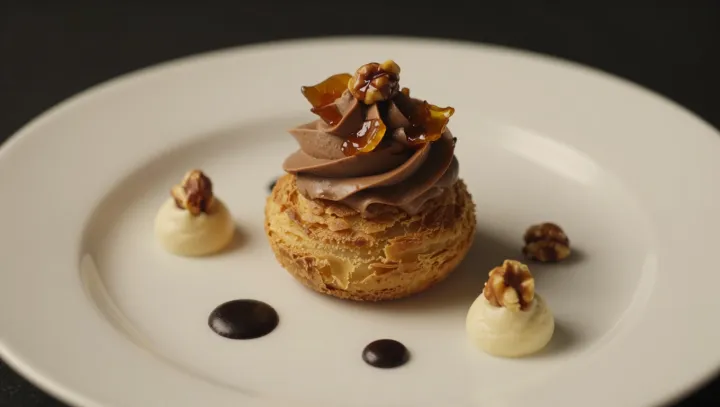
The oven completes a delicate bargain between expansion and strength. As steam pressure pushes outward, protein coagulation and further starch changes help set the walls; continued baking dries them enough to resist collapse. The puff must cool before cream is piped inside, or the filling may soften or melt. Hazelnuts add crunch. Fine caramel decorations contribute a brittle sweetness against the cream and the crisp shell. What began as a spoonful of cooked paste becomes a vessel for air, and then for pleasure.