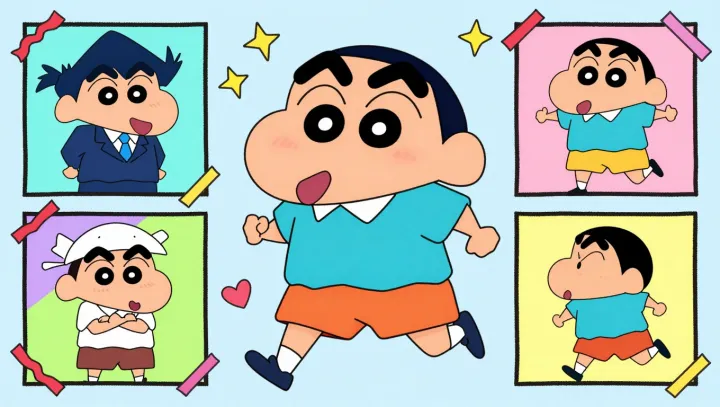
Good manners make excellent comic bait. Toru Kazama takes pride in being studious and polished, while his friend Shin-chan treats respectable behavior as something to disrupt. Their mismatch is more than a contest between a model child and a troublemaker: it is a joke about how much effort it takes to look grown up.
Kazama's composure is never quite secure. His polished manner and occasional boasting suggest a boy who cares how he is seen; Shin-chan, by contrast, acts on impulses that polite company would rather suppress. In sociological terms, Kazama practices impression management, presenting a version of himself suited to social expectations. Shin-chan keeps disturbing the performance. The humor depends on that imbalance: the harder Kazama tries to maintain his dignity, the more exposed his frustration becomes. He is not simply the sensible one. His desire to appear superior gives the mischief somewhere to land.
The friendship softens the joke without making it safe. Kazama and Shin-chan remain friends despite their clashing manners, which allows their differences to generate comedy rather than end the relationship. Social norms demand restraint, but childhood rarely follows a script so neatly; Kazama embodies the pressure to behave, while Shin-chan gives unruly desires room to speak. Neither boy has to deliver a lesson. The joke leaves a small question hanging: how much of growing up is learning manners, and how much is learning to hide the urge to break them?