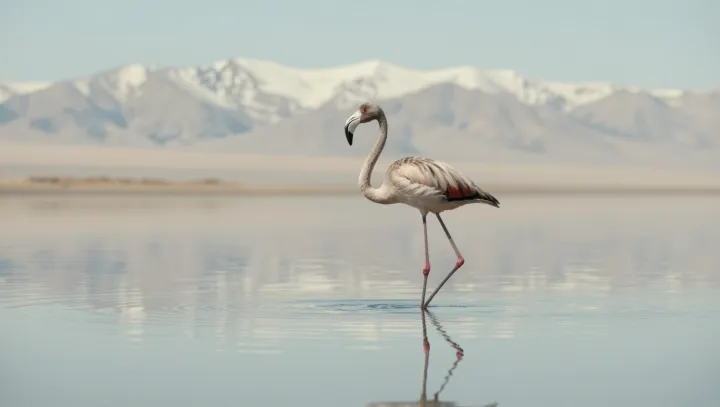
A flamingo earns its pink. The gray-brown juvenile standing in the shallows carries little of the color associated with adulthood, but its food contains the raw materials for that transformation. What looks like a change of costume begins with chemistry, and its progress depends on both diet and the growth of new feathers.
The bird is less a painter than a processor. Flamingos consume carotenoids, pigments found in algae and in small aquatic animals that have eaten them. During digestion, these fat-soluble compounds are absorbed through the intestine and transported in the bloodstream. Enzymes, including those active in the liver, modify some carotenoids into pigments that can contribute to the pink and reddish colors seen in plumage. Food sets the palette. Species and available diets differ, so the precise mixture of pigments and the resulting shades vary as well.
New feathers carry the evidence. Pigments reach growing feather follicles through the blood and are deposited as feathers form; an existing feather does not simply turn pink from the inside. Molting gradually replaces older plumage, allowing the color to become more apparent as the bird matures. A poor supply of dietary carotenoids can leave feathers paler, while nutrition and health also affect their appearance. In captivity, diets are often formulated to provide appropriate pigments alongside other nutrients. The shallow water holds no pink dye waiting to wash over the bird. The color must first pass through its body, then find its place in feathers not yet grown.