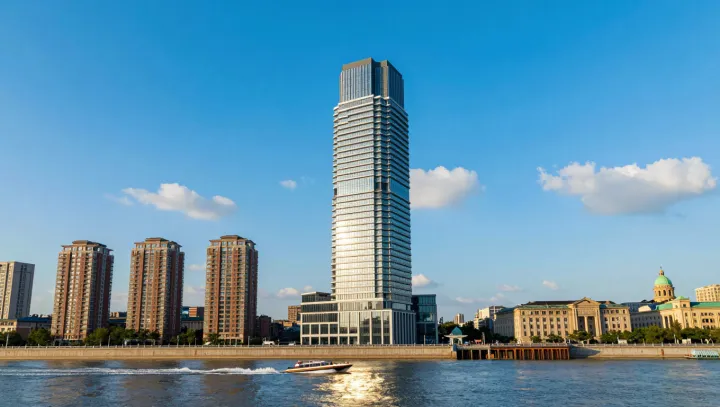
Middle floors are emerging as the real battleground in vertical housing, while buyers still argue over the top or the bottom. A growing body of building data points to one specific band in the middle of a tower where conflicting forces settle into a rare equilibrium.
Acoustic pressure levels tend to drop as distance from street traffic increases, yet do not pick up the stronger wind‑driven vibrations often recorded near the roof. Particulate concentration follows a similar curve: fine dust disperses above the lowest floors but usually thins again before the upper levels exposed to more outdoor air exchange. The result is a narrow slice of the stack where decibel readings and particulate density both sit below commonly cited comfort thresholds.
Daylight performance also follows its own marginal utility curve. Too low, and facade obstruction and street‑level shading reduce illuminance; too high, and direct solar gain spikes cooling loads and glare. In the middle band, window luminance often stays within a range that supports visual comfort while keeping HVAC energy demand more stable. That same balance of solar radiation and ambient air temperature tends to hold indoor operative temperature closer to design targets with less mechanical intervention.
Transaction data from dense urban markets indicates that units on this middle tier often command a pricing premium over both lower and very high floors when adjusted for size and orientation. Agents describe a faster resale velocity, as risk‑averse buyers cluster around floors that signal fewer external uncertainties: less traffic noise, moderated wind exposure, more consistent thermal conditions. In towers designed with repeating floor plates, that preference can turn a quiet structural midpoint into the most contested address in the building.