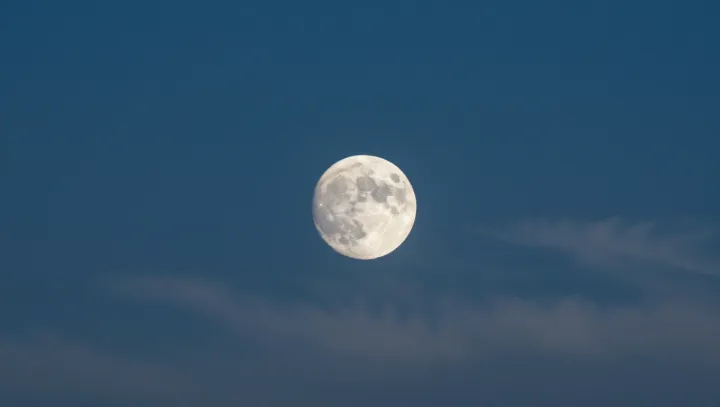
Rust showing up in dust from the Moon’s far side forces a rethink of how Earth and its satellite trade material. Spectral fingerprints of hematite, a classic iron oxide, appeared in samples returned from regions that lack both liquid water and a breathable atmosphere, conditions normally viewed as non‑starters for standard oxidation chemistry.
Laboratory spectroscopy and electron microscopy mapped iron‑bearing grains and found surfaces coated with hematite, a product of redox reactions between metallic iron and molecular oxygen. Yet solar wind normally floods the Moon with hydrogen, a reducing agent that suppresses oxidation and pushes chemical entropy in the opposite direction of rust formation. To reconcile this, researchers turned to plasma physics and orbital geometry rather than to local water or air.
Models of the Earth–Moon system show that, during specific orbital alignments, the Moon passes through the magnetotail, the elongated nightside region of Earth’s magnetosphere. In that corridor, oxygen ions that originated in Earth’s upper atmosphere can stream outward and strike exposed lunar regolith. Over immense timescales, these ions appear to act as an invisible oxidant supply, slowly converting iron in lunar soil into hematite on even the far side, turning the Moon into a subtle archive of Earth’s leaking atmosphere.