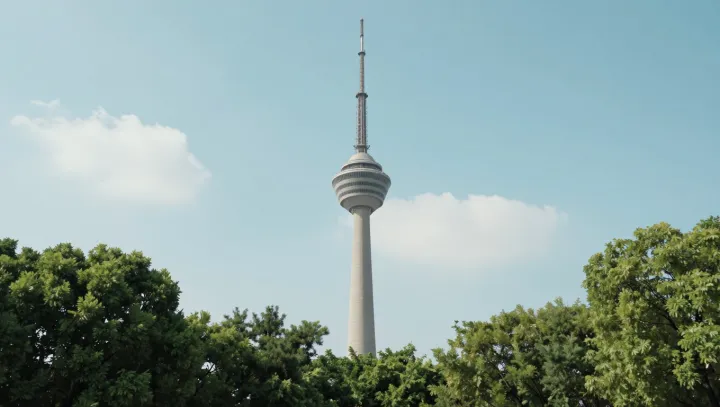
A concrete shaft rises more than four hundred meters from the middle of a calm urban lake, anchored to rock that lies far below the water surface. The Tianjin Radio and Television Tower stands on a circular artificial island, whose foundations consist of deep piles socketed into bedrock and a thick reinforced concrete raft that spreads the immense compressive load.
Engineers first drained and enclosed a section of the lake with cofferdams, then excavated to competent strata and drove foundation piles until settlement and bearing tests met structural safety margins. The lake was later refilled, turning the water into a functional layer rather than a threat. Surrounding water stabilizes pore water pressure in the soil, slows differential consolidation and reduces frost heave. It also forms a protective moat that limits surface traffic vibration and shields the base from fire exposure.
Hydrostatic pressure around the island keeps lateral earth pressure more uniform, reducing shear stress on retaining structures and limiting erosion at the toe of the foundations. With a controlled drainage system and impermeable linings, water acts as part of the geotechnical design, not an uncontrolled load, allowing the tower in the lake to maintain long‑term serviceability.