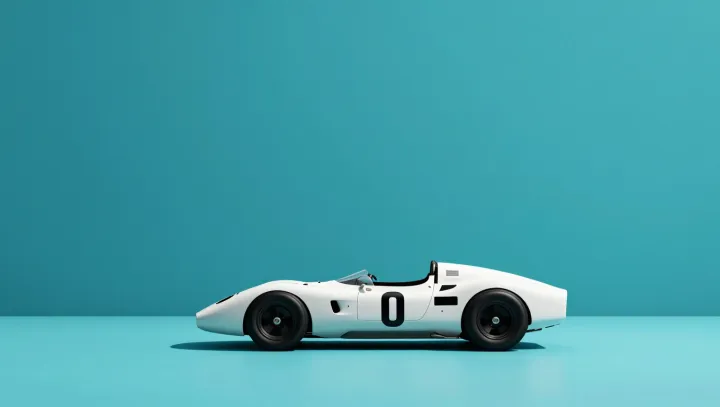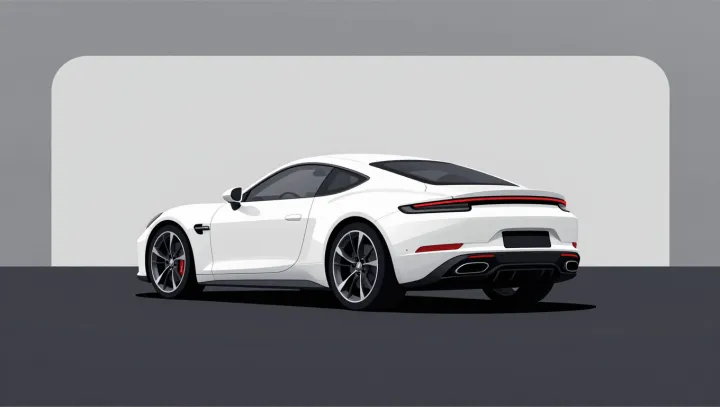
A loose pencil outline on paper already hints at the equations that will eventually shape it. In modern studios, the path from sketch to showroom passes through a layer of mathematics that describes both the surface of the car and the air sliding over it.
Designers first translate hand drawings into digital curves, then into NURBS surfaces, a standard of differential geometry that guarantees smooth continuity across panels. Each crease and radius is parameterized, so a small change to a control point ripples through the body with exact, repeatable curvature. That same geometric rigor lets engineers compute surface normals and local pressure zones rather than relying on intuition alone.
Aerodynamicists then run computational fluid dynamics simulations, solving discretized forms of the Navier–Stokes equations on a mesh wrapped around the car. The solver tracks velocity fields, turbulence and boundary layers, revealing where vortices form and drag spikes. Designers feed these pressure maps back into the surface model, nudging rooflines and spoilers until airflow separates later and lift drops, long before any clay model meets a physical wind tunnel.