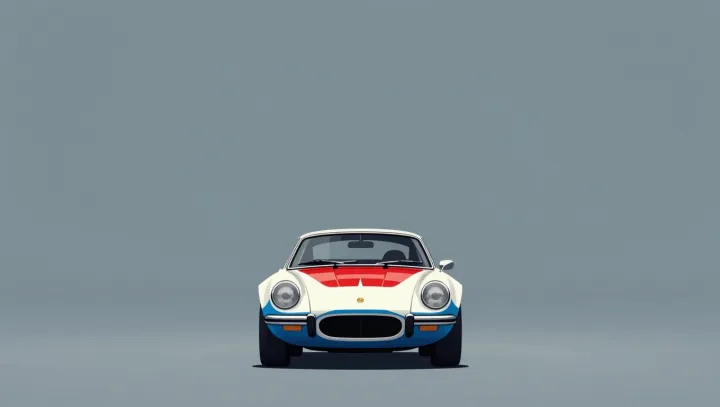
The Porsche 911 keeps its engine behind the rear axle, a configuration many engineering textbooks treat as a cautionary diagram. That placement loads the driven wheels directly, concentrating static weight over the rear tires and creating a built-in traction advantage whenever the car accelerates on real, imperfect roads.
Under throttle, longitudinal weight transfer further shifts load rearward, increasing the normal force on those tires and raising the available friction according to basic Newtonian mechanics. While mid-engine cars chase an idealized center of mass for neutral handling, the 911 embraces an asymmetric mass distribution and a low polar moment of inertia to turn every burst of acceleration into a grip multiplier, especially on corner exits where racing is often decided.
This layout once meant pronounced oversteer and a narrow stability margin. Instead of abandoning it, Porsche treated that instability as a controllable variable. Suspension kinematics, anti-roll bar tuning, tire stagger, electronic stability control and torque-vectoring differentials effectively manage yaw dynamics and mitigate snap oversteer without sacrificing the core benefit: a rear axle acting like a mechanical anchor under load. On wet surfaces, bumpy circuits and tight stages, that “wrong” architecture repeatedly converts theoretical compromise into measurable lap-time gain and long-term competitive identity.